Trucking insurance in Alaska
$750,000 Federal liability minimum for interstate trucks 10,001 pounds or heavier
Maximum age of your MCS-150 update at registration.
dmv.alaska.govMinimum Alaska bodily injury and property damage liability.
dmv.alaska.govMonthly cost, national figures
$665 to $1,165 a month for an established hotshot with a clean record (Trucking Insurance Services)
$1,000 to $1,800 in the first two years of a new MC number (Trucker Path Insurance)
What moves the priceOwn MC number
$300 for the OP-1 application; you name a BOC-3 process agent, UCR is $55 a year for 0 to 2 trucks, more for bigger fleets (UCR Plan), and your insurer files the BMC-91X within 20 days of FMCSA Register publication.
New authority checklistUnder trucking insurance Alaska rules, bodily injury coverage starts at $50,000 per injured person and $100,000 per accident, with $25,000 more for damage to property. Local vehicles fall under these state minimums, but hauling freight across borders pushes your legal minimum up to $750,000 or higher. If coverage is arranged before you reach the registration counter, delays are prevented.
Alaska intrastate trucking insurance requirements
Owners of vehicles that require state registration must maintain active liability coverage. Bodily injury or death coverage of $50,000 per person and $100,000 each accident, plus $25,000 toward property damage, is the minimum that Alaska's mandatory insurance law requires. Alaska's Division of Motor Vehicles can refuse truck registration unless you certify your coverage meets state law first.
State law only requires liability coverage, but insurers must offer you underinsured and uninsured motorist coverage in writing. A heavy truck wreck is rarely covered by state minimums, so a commercial truck insurance agent helps you pick limits that protect your livelihood.
Registering your rig with Alaska commercial truck insurance
You must show the Division of Motor Vehicles the USDOT number of the carrier that handles safety when a commercial vehicle is registered. A USDOT number is federal identification used to monitor a company's safety record. Once you have that number, you're automatically enrolled in PRISM, the mandatory safety program that Alaska DOT&PF Measurement Standards and Commercial Vehicle Enforcement monitors. A carrier that PRISM flags as unsafe cannot register vehicles in Alaska.
Before you apply, an agent knowledgeable in truck insurance can check whether your federal profile matches your policy details, since small paperwork mismatches hold up plates. You must meet these state rules as well when registering your truck:
- Your USDOT number's tax identification number and the one used to register the vehicle must match.
- With an existing USDOT number, your Form MCS-150 update must be no more than 1 year old. This regular federal report, Form MCS-150, lists your current mileage and truck count.
- When your vehicle owes the federal tax on heavy vehicle use, you must send Heavy Usage Vehicle Tax details and proof of payment to Alaska's Division of Motor Vehicles.
- If you don't have computer access or need help getting a USDOT number, call the state office at (907) 365-1206.
Commercial truck weight and size rules on the highway
State and federal rules throughout the highway system are enforced by the Alaska DOT&PF Commercial Vehicle Compliance Section. A state permit is required before you drive a vehicle and load that go over legal size or weight limits (covered heavy-duty tow and recovery vehicles are exempt from legal weight limits).
With no permit, keep your truck inside Alaska's highway limits. Width tops out at 102 inches with the load counted. Each linear inch of tire width may carry up to 600 pounds. Once a multi-axle group passes 50 percent of legal weight, every axle needs at least 6,000 pounds. Your policy will match the permits and weights you operate under if you talk with a trucking insurance agent.
What limits do I need for Alaska trucking insurance?
The limit you need depends on your cargo, your truck's weight rating, and where you haul. Hauling for hire across state or international lines means signing up for Unified Carrier Registration at ucr.gov and satisfying federal insurance filing requirements. To prove coverage, your insurer submits Form BMC-91, Form BMC-91X, or a Form BMC-82 bond to federal regulators. Your interstate authority stays active through Form BMC-91X, the electronic filing.
Coverage types in a truck policy
 LiabilityPays for injuries and damage your truck causes to other people. The federal minimum is $300,000 to $5,000,000.
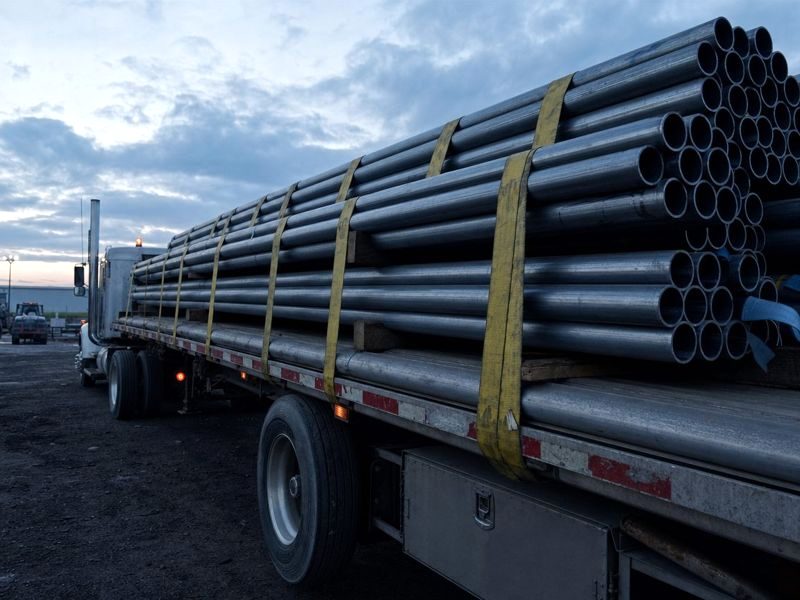 Motor truck cargoPays for the load you haul if it is damaged or stolen. Most brokers ask for $100,000.
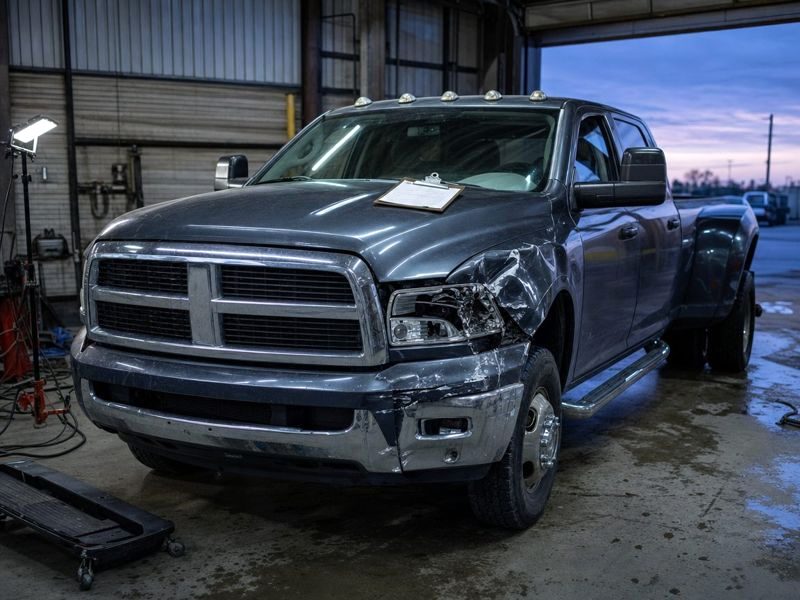 Physical damageRepairs or replaces your own truck and trailer after a crash, fire or theft.
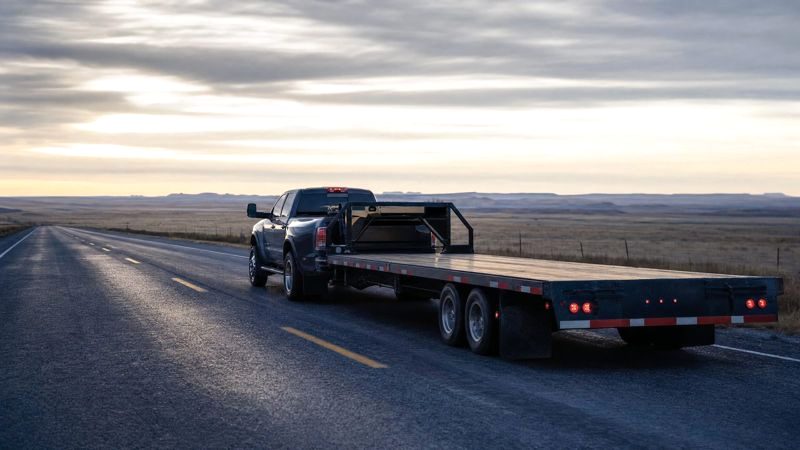 Non-trucking liabilityCovers a driver working for a trucking company who uses the truck between loads, off the job.
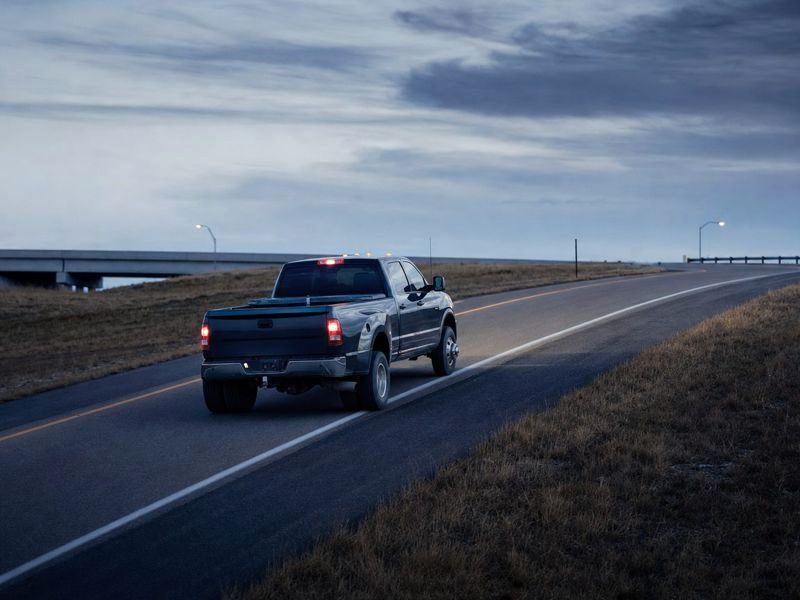 BobtailCovers a truck you drive for a trucking company when it has no trailer, such as a pickup heading home after dropping a load.
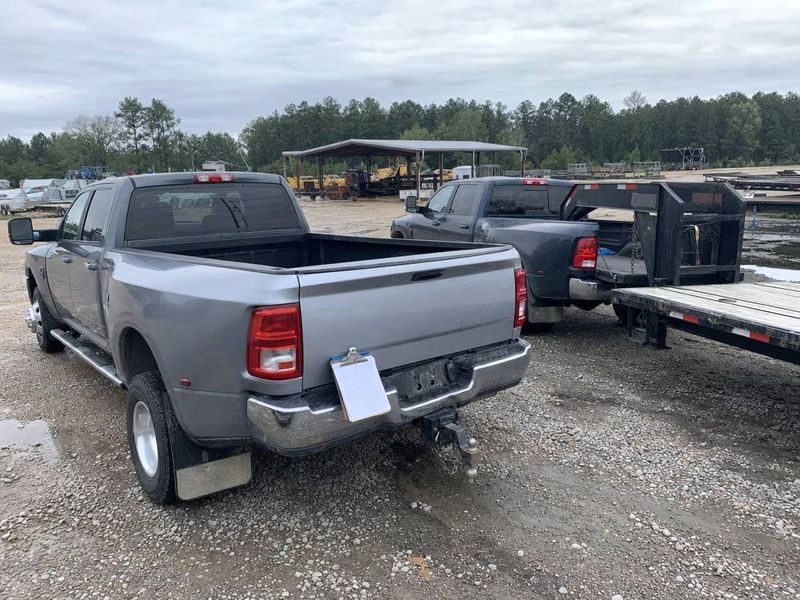 Trailer interchangePays for damage to a trailer you pull for someone else under a written trailer-sharing agreement.
In our experience, most freight brokers want limits that go beyond the base minimums set by the state or federal government. One example: C.H. Robinson requires carriers to hold $1,000,000 in auto liability coverage, with $100,000 for cargo. Your brokers' expected filings and limits can be set up precisely by an agent who handles commercial trucks every day.
| Operation or cargo type | Minimum liability limit |
|---|---|
| Alaska intrastate only (any registered vehicle) | Bodily injury: $100,000 each accident and $50,000 for one person; property damage: $25,000 |
| Interstate for-hire property (fleet only under 10,001 pounds) | $300,000 |
| Interstate for-hire non-hazardous property (10,001 pounds or more) | $750,000 |
| For-hire interstate oil, hazardous waste, or placarded hazardous materials | $1,000,000 |
 C.H. Robinson broker requirement | $1,000,000 auto liability and $100,000 cargo |
| Bulk hazardous tanks, radioactive materials, poison gas, or explosives; interstate or private | $5,000,000 |
Questions people ask
For remote Alaska places with no vehicle registration requirement, do I need insurance?
No. In areas without registration rules, Alaska does not require liability insurance. You still must carry liability insurance in an exempt area when your record shows 6 or more points from a driving violation in the last 5 years.
What are the consequences in Anchorage for driving without insurance proof?
In Alaska, you must keep proof of liability insurance with you whenever you drive. Driving without proper coverage can suspend your driver's license. The Municipality of Anchorage may impound a vehicle when proof of insurance is missing.
Will Alaska permit added weight for auxiliary power units or winter traction?
On certain northern Alaska highways, yes. From October 1 through April 15, you may move legal axle weights onto drive axle groups by as much as 2,000 pounds for each axle. A truck with an idle reduction unit or auxiliary power unit may also run up to 550 pounds heavier.
Sources
- Alaska commercial vehicle registration steps (PDF) (dmv.alaska.gov)
- Financial responsibility, minimum levels (49 CFR 387.9)
- Carrier Resources: FAQs (C.H. Robinson)
- Alaska mandatory insurance rules (dmv.alaska.gov)
- Alaska Division of Insurance coverage options (commerce.alaska.gov)
- Alaska Commercial Vehicle Compliance (dot.alaska.gov)
- 17 AAC 25, Alaska vehicle size and weight rules (dot.alaska.gov)
- Insurance filing requirements (FMCSA)
Related
Insuring a truck in Alaska
A trucking agent who places policies in Alaska can quote it by phone, or you can send your details.
A quote costs nothing, and you do not have to buy.