
Owner operator insurance
Owner operator insurance starts with protection for injuries and damage your rig causes others, and federal law sets the floor at $750,000 when you haul ordinary freight between states in a truck with a rating of 10,001 lbs or higher. What else you need comes down to whether you operate under your own authority or lease on with a carrier.
- Federal liability floor, general freight, 10,001 lbs or heavier: $750,000
- What most brokers want to see: $1,000,000 in auto liability and $100,000 in cargo
- Typical monthly truck insurance cost nationwide: $734 to $926
- Leased on: the carrier's liability applies while you're under dispatch, and coverage for your own truck and personal driving is usually yours
What can a policy include?
According to Progressive Commercial, a truck policy protects you from accidents, truck damage, breakdowns, and cargo loss. The policy is built from several separate coverages, and you pick the ones your situation calls for.
- Liability: pays for harm and property damage you cause to others. Federal rules make this coverage mandatory.
- Physical damage: covers fixing or replacing your truck following an accident, and also covers theft and natural disasters, with no distance limit, according to Progressive's non-trucking liability page.
- Motor truck cargo: pays when the freight you're hauling is lost or damaged.
- Motor truck general liability: pays for injuries or damage arising from business activity that doesn't involve the truck.
- Trailer interchange: protects you when a trailer belonging to someone else is damaged while you haul it under an interchange agreement, meaning a written arrangement to exchange trailers with another carrier.
This kind of insurance is for independent contractors, freelance drivers, and truckers who are self-employed. If you run under your own authority, you need to arrange your own liability coverage, while physical damage, cargo and general liability cover other risks, and trailer interchange applies if you use other people's trailers under an interchange agreement. Authority is the government's approval letting you carry freight for hire in your own business name.
How much liability do you need?
How much liability you must carry depends on your freight and your truck's weight rating. The Federal Motor Carrier Safety Administration sets these limits, and they apply to for-hire carriers hauling between states.
| Freight type | Vehicle weight rating | Required liability |
|---|---|---|
| General freight | Lighter than 10,001 lbs (all trucks in the fleet) | $300,000 |
| General freight | Rated 10,001 lbs or heavier | $750,000 |
| Placarded hazmat shipments, oil, or hazardous waste | Rated 10,001 lbs or heavier | $1,000,000 |
| Explosives, poison gas, radioactive material, or bulk-tank hazardous substances | Any weight | $5,000,000 |
Proof of this coverage goes to the federal agency from your insurance company, not from you. Once your authority application is published, the insurer gets 20 days to file it; miss that window and the authority request gets thrown out. When your hauling stays within a single state, that state sets the minimum and the filing, often a Form E from your insurer.
Many brokers ask for more than the legal minimum. Below are the requirements some of the biggest brokers publish for carriers.
| Broker | Liability coverage | Cargo coverage |
|---|---|---|
 C.H. Robinson | $1 million | $100,000 |
 TQL | $1 million | $100,000 |
 Uber Freight | $1 million | $100,000 |
 Amazon Relay | $1 million per occurrence | $100,000 |
 J.B. Hunt | Federal minimum of $750,000 | None set federally |
On top of that, Amazon Relay and Uber Freight each call for $1 million of general liability coverage as well.
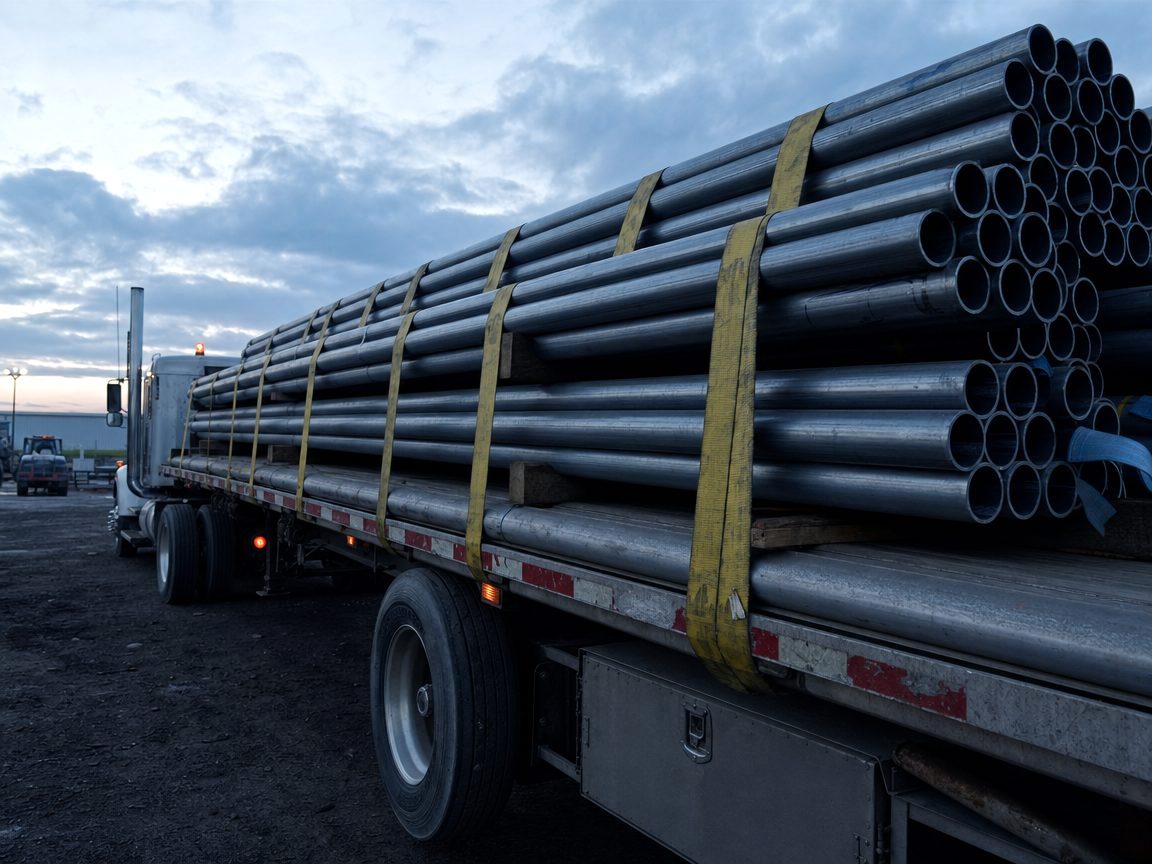
Insurance when you're leased on
With a permanent lease, the motor carrier typically carries your primary liability insurance. The carrier's primary liability coverage applies while you're under dispatch, so check the policy and lease for its terms. That lease has to spell out the carrier's obligation to keep this coverage in place, and it must identify who provides any other insurance on the truck.
That liability policy from the carrier won't pay to fix your own truck. Physical damage coverage is still on you, to repair or replace the truck after a crash or theft. That gap remains until you add physical damage, even when you already carry non-trucking liability.
Non-trucking liability applies when you're using the truck for personal, non-business driving. Many carriers make it a condition of the lease. It covers medical bills from injuries, damage to another person's vehicle or property, and legal expenses like lawyer bills and court fees, as Progressive explains.
There are some limits worth knowing:
- It won't cover accidents that happen while you're under dispatch.
- You can't qualify while you're currently driving a truck for another company.
- Bobtail and deadhead coverage aren't always included.
Bobtail insurance is for operating the truck without any trailer. Deadhead insurance is for driving with an empty trailer. Since these aren't always included in non-trucking liability, look at your lease to see which ones it requires.
What it costs
What you pay comes down to 4 things: the kind of business you run, the truck itself, your record behind the wheel, and your home base. Those same factors also determine what non-trucking liability costs.
| Trucker category | Typical monthly cost |
|---|---|
 Specialty truckers (Progressive nationwide average) | $734 |
| Transport truckers (Progressive nationwide average) | $926 |
| Hotshot truckers, commercial auto coverage | $896 ($10,757 a year) |
| Hotshot operations, general liability alone | $32 |
When you're leased on, plenty of carriers will sell you physical damage and non-trucking liability through their own programs. Getting these coverages yourself is often cheaper, according to Progressive.
Questions drivers ask
Which coverages does an owner-operator need?
Under your own authority, federal rules require liability coverage. No federal cargo insurance rule applies to freight, only to household goods movers, but most brokers won't offer you loads without it. If you're leased on, carriers often require non-trucking liability, while physical damage (and in some cases bobtail) picks up what the carrier's policy leaves out.
What does a $1,000,000 liability policy run?
There's no set price, since it depends on the kind of operation you run, the vehicle you drive, your history behind the wheel and where you're based, so the fastest way to know is to get a quote. If you run long distances, Progressive also offers unlimited primary liability in most states. Eligibility requires the policy to include at least 1 semi tractor and to cover a radius over 500 miles, measured point to point rather than by road distance.
Do owner-operators cover their own insurance costs?
Running under your own authority, every policy is yours to pay for. When leased on, the carrier might pay up front and later deduct insurance costs from your pay, though the lease has to spell out that charge-back amount. If you purchase coverage via the carrier, you may request a copy of each policy. The certificate has to list the insurer, policy number, dates, plus your cost and deductible for each coverage.
Sources
- Financial responsibility, minimum levels (49 CFR 387.9)
- Owner Operator Insurance (Progressive Commercial)
- Lease requirements (49 CFR 376.12)
- Non-Trucking Liability Insurance (Progressive Commercial)
- Security for the protection of the public: Minimum limits (49 CFR 387.303)
- Insurance filing requirements (FMCSA)
- Carrier Resources: FAQs (C.H. Robinson)
- FAQs (TQL)
Related
Get your rig priced by an agent
Hotshot Insure does not sell insurance. An independent agent who places hotshot and small truck policies prices your rig by phone, or you can send your details.