
Motor truck cargo insurance
Motor truck cargo insurance can cover freight that's damaged or lost while you're hauling it. Several major brokers require carriers to have $100,000 in cargo coverage. The government only requires cargo insurance for people who move household goods. If you haul regular freight, the law doesn't require it, but many brokers and shippers will.
- Typical broker asks: $100,000 for cargo and $1,000,000 for auto liability
- Federal cargo rule: No requirement for general freight; household goods movers are the exception
- Household goods movers: $5,000 for each vehicle and $10,000 for each incident
- Pay-per-load choice: As much as $2,000,000 for a single load via Loadsure
Cargo insurance for truckers
Cargo insurance protects you against damage or loss of the freight riding on your trailer. Fires, crashes, and theft are typical causes. Your load stays protected while in transit, even when the truck sits parked mid-trip.
Your truck itself is not covered. Fixing your own vehicle calls for separate physical damage coverage.
Some insurers sell cargo coverage as a standalone policy, while others attach it to an existing trucking liability plan as extra protection. Plenty of shippers and clients will ask you to have it.
According to Progressive, what you pay comes down to four factors:
- The kind of work you do
- The truck you drive
- Your record behind the wheel
- Where you're based
You'll also see two other terms on quotes. The limit is the maximum a policy pays out, and the sender or receiver can set it. The deductible is the share of each claim you cover yourself.
What do brokers usually ask for?
Amazon Relay, Uber Freight, TQL and C.H. Robinson all ask for $100,000 in cargo coverage and $1,000,000 in auto liability. Each broker sets its own rules, so check with the one you want to haul for.
C.H. Robinson says the federal minimums fall short for hauling most of its freight. If you're thinking about hauling for C.H. Robinson, there's no minimum fleet size, but your MC authority must be active for at least 7 days. Your insurance agent sends your certificate of insurance straight to Highway, and processing takes 1-2 business days after every required document is in.
A few brokers want more. Amazon Relay also requires $1,000,000 in general liability along with $50,000 in trailer replacement coverage. Loads that are specialized or high-value can call for extra cargo coverage too.
| Requirement source | Auto liability | Cargo |
|---|---|---|
 Amazon Relay, Uber Freight, TQL, C.H. Robinson | $1,000,000 | $100,000 |
 J.B. Hunt's explanation of federal rules | $750,000 auto liability for applicable freight carriers | No federal cargo requirement for general freight |
| Household goods movers | $5,000 for each vehicle and $10,000 for each incident |
C.H. Robinson points to a $25,000 federal cargo minimum. J.B. Hunt and Progressive say no such requirement exists for freight carriers besides household goods movers, so check what your broker actually wants.
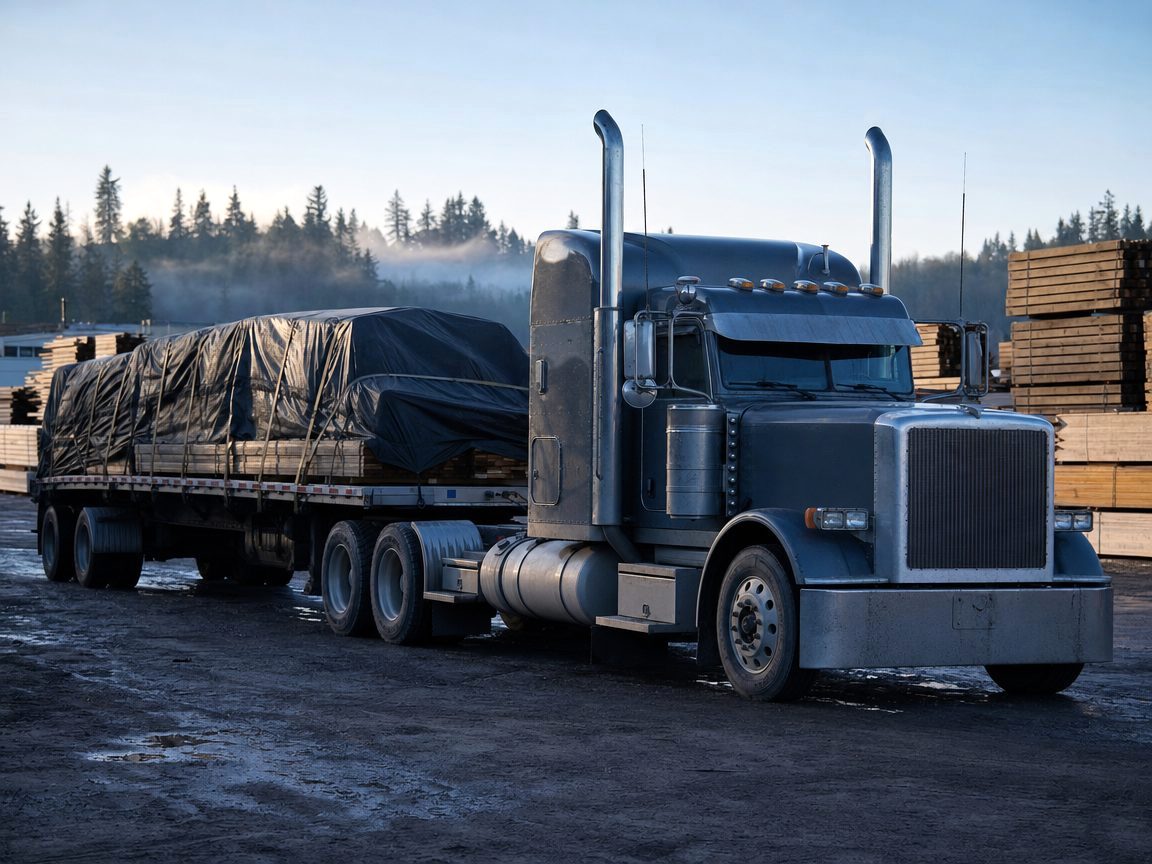
Hotshot cargo insurance
Per DAT, hotshot truckers frequently pay steeper cargo premiums than carriers moving ordinary freight. You can buy it two ways.
- Monthly contract: A flat monthly rate, no matter what the cargo is worth. These usually run pricier since they're priced around the most expensive freight you'd likely haul.
- Per-load coverage: Sometimes called spike and gap insurance. You cover a single load at a time.
Loadsure, which you can access through the DAT load board, covers up to $2,000,000 per load with no monthly premiums. Coverage runs for however long the delivery takes. It includes theft, damage while loading or unloading, and Acts of God. Many load types qualify for door-to-door coverage, specialty loads included.
What a policy may not cover
Progressive limits several freight types:
- Freight that isn't shown on your paperwork, like a bill of lading (the receipt and contract that spells out your load) or a rate confirmation
- Vehicles or equipment the bill of lading doesn't mention
- Pharmaceuticals, tobacco products, and alcohol, though beer and wine are allowed
- Live animals, unless the animal dies or has to be put down in the first 24 hours
Hazardous materials and pharmaceuticals can require special coverage that a standard cargo policy typically leaves out. Progressive's cargo insurance isn't sold in every state, either.
If you pull trailers your company doesn't own, you may be required to carry trailer interchange insurance. It covers damage to or loss of that trailer. The government doesn't require it, but a contract might.
Questions drivers ask
What does $100,000 of cargo coverage run?
There's no set price, because it depends on your kind of work, your truck, your driving record and where you're based. DAT says cargo premiums can reach tens of thousands of dollars, and hotshot drivers often pay more than carriers of ordinary freight.
How much liability coverage should I carry on top of cargo?
If you're a for-hire carrier hauling non-hazardous freight across state lines in a vehicle rated 10,001 lbs or more, federal rules require at least $750,000 in liability coverage. If your fleet runs nothing but lighter trucks, the floor is $300,000. Many brokers set the bar at $1,000,000.
What other requirements might a broker have?
J.B. Hunt notes that certain divisions or freight types can tack on supplemental insurance, equipment, experience, or training demands.
Sources
Related
Get your rig priced by an agent
Hotshot Insure does not sell insurance. An independent agent who places hotshot and small truck policies prices your rig by phone, or you can send your details.