
Trucking insurance in Georgia
$750,000 Minimum liability for general freight at 10,001 lbs or more
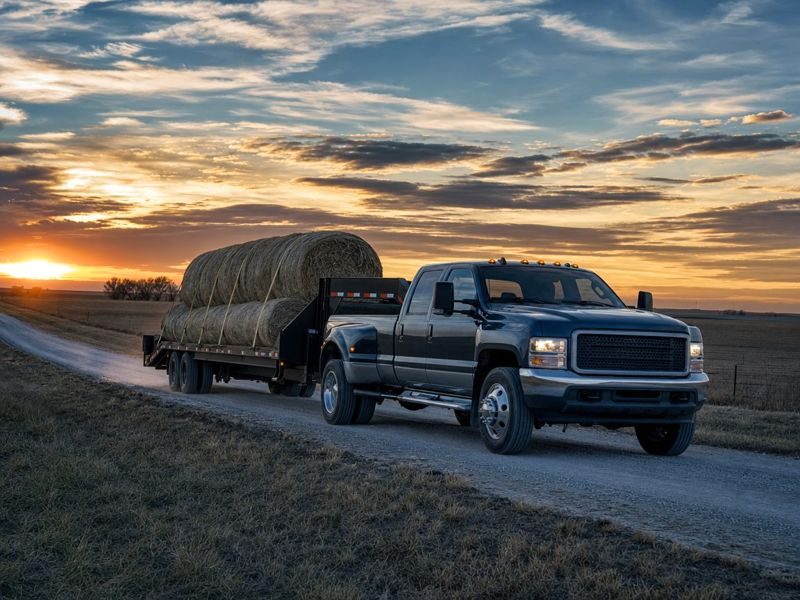
Liability certificate filed within 90 days of application.
rules.sos.ga.govAnnual Georgia motor carrier registration fee.
rules.sos.ga.govMonthly cost, national figures
$665 to $1,165 a month for an established hotshot with a clean record (Trucking Insurance Services)
$1,000 to $1,800 in the first two years of a new MC number (Trucker Path Insurance)
What moves the priceOwn MC number
$300 for the OP-1 application; you name a BOC-3 process agent, UCR is $55 a year for 0 to 2 trucks, more for bigger fleets (UCR Plan), and your insurer files the BMC-91X within 20 days of FMCSA Register publication.
New authority checklistA compliant trucking insurance Georgia policy needs at least $750,000 of liability coverage for trucks hauling general freight at 10,001 pounds or more. Your insurer must also send Form E to the state no later than 90 days after you apply for authority. Talking with an agent who handles commercial trucks helps you fit your policy to your exact weight class.
Georgia intrastate trucking insurance requirements and filings
If your loads stay strictly inside state lines (intrastate commerce), state authority must be applied for before you operate. Brokers, freight forwarders, and motor carriers register through the Georgia Department of Public Safety, per Title 40 of the Georgia code. Once your application is accepted, you have 90 days to send in your insurance forms.

Your insurer sends Form E, the state certificate proving you carry liability for property damage and bodily injury. Form H proves cargo coverage. Under the filing rules in Georgia, certificates must list the Georgia Department of Public Safety, cover only your legal name (never held jointly), and get updated at least every 2 years. Submit forms by mail, email, fax, or the National Online Registry; they must be typed, since handwritten forms get rejected. A trucking insurance agent can submit your Form E electronically, which keeps your authority from stalling.
Minimum limits for Georgia commercial truck insurance
Basic Georgia auto liability covers bodily injury at $25,000 for each person and $50,000 for each incident. It also covers $25,000 in property damage; physical damage coverage isn't required by state law. However, Georgia takes on the federal trucking rules found in Title 49, including the insurance rules in Part 387, and makes intrastate carriers follow them.
A vehicle carrying hazardous materials in any quantity, or one whose gross vehicle weight rating or actual weight is 10,001 pounds or more, counts as a commercial motor vehicle in Georgia. The manufacturer lists a maximum safe loaded weight on your door label, and that figure is your gross vehicle weight rating. We see freight brokers such as C.H. Robinson call for auto liability at $1,000,000 and cargo coverage at $100,000, even though the law requires $750,000. An experienced truck agent can weigh the $1,000,000 policy brokers prefer against the legal minimum.
| Carrier and cargo type | Vehicle weight | Minimum liability |
|---|---|---|
| Basic Georgia auto minimum | Under 10,001 lbs | $25,000 / $50,000 / $25,000 |
| For-hire property (light fleet only) | Under 10,001 lbs | $300,000 |
| For-hire non-hazardous property | 10,001 lbs or more | $750,000 |
| For-hire oil, hazmat waste, or placarded loads | Any weight | $1,000,000 |
| Bulk hazmat, explosives, poison gas, or radioactive loads, for-hire or private | Any weight | $5,000,000 |
 Freight broker standard (C.H. Robinson) | 10,001 lbs or more | $1,000,000 auto / $100,000 cargo |
Coverage types in a truck policy
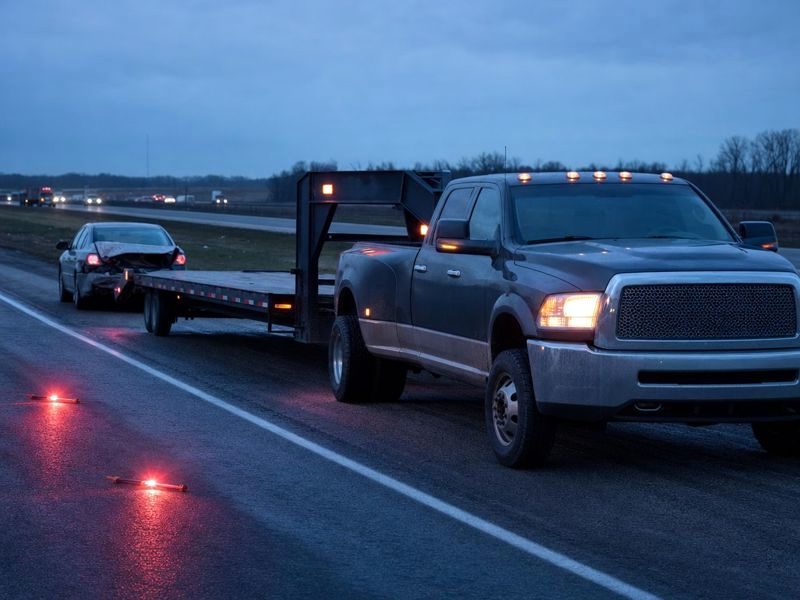 LiabilityPays for injuries and damage your truck causes to other people. The federal minimum is $300,000 to $5,000,000.
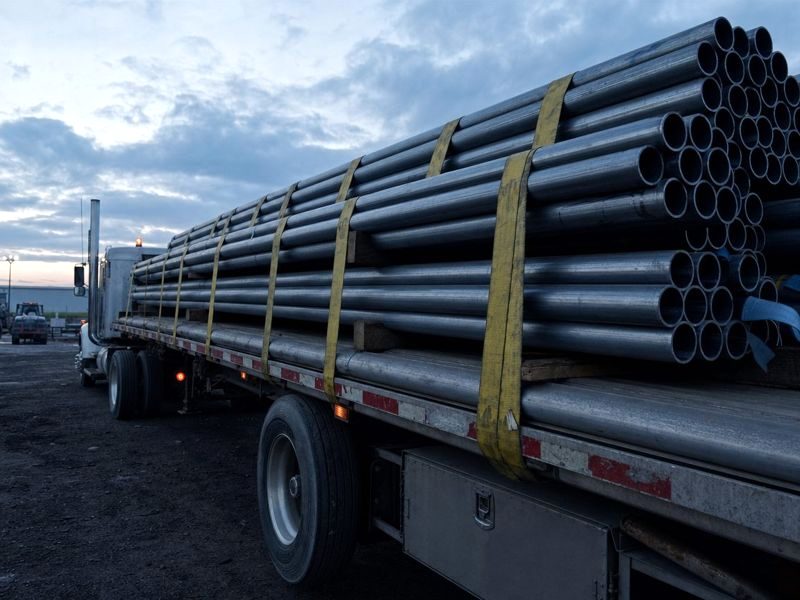 Motor truck cargoPays for the load you haul if it is damaged or stolen. Most brokers ask for $100,000.
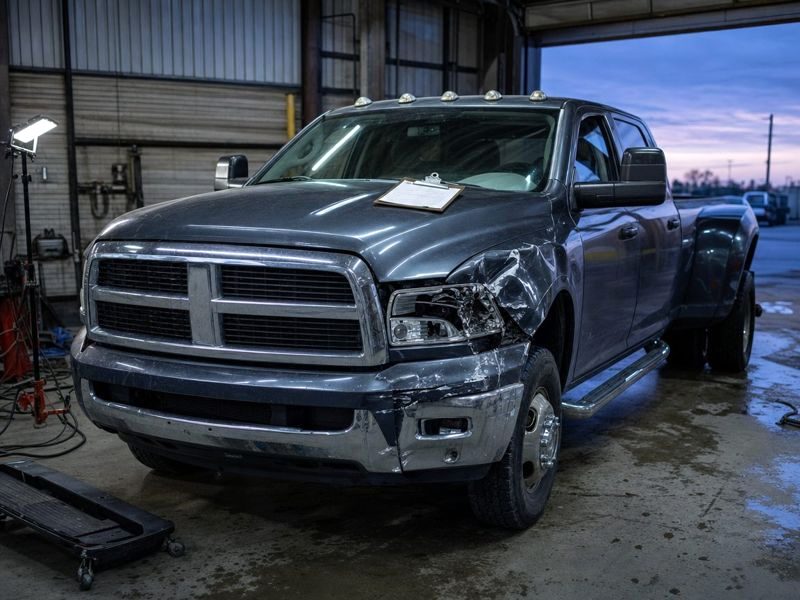 Physical damageRepairs or replaces your own truck and trailer after a crash, fire or theft.
 Non-trucking liabilityCovers a driver working for a trucking company who uses the truck between loads, off the job.
 BobtailCovers a truck you drive for a trucking company when it has no trailer, such as a pickup heading home after dropping a load.
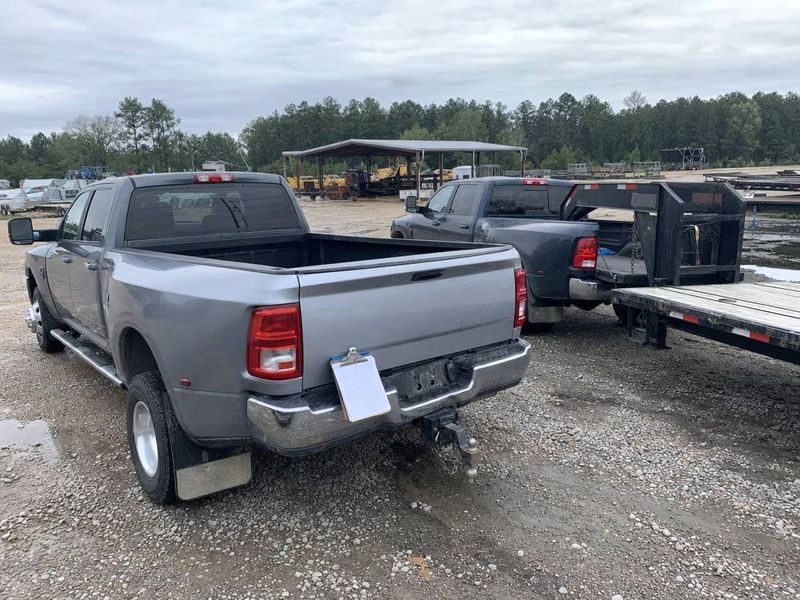 Trailer interchangePays for damage to a trailer you pull for someone else under a written trailer-sharing agreement.
Staying current with your USDOT number and annual registration
Trucks working in-state and rated over 10,000 pounds have needed a USDOT number for intrastate carriers since October 1, 1998, under Motor Carrier Compliance Division rules. Each side of the power unit must show your legal or trade name plus your number, with USDOT in front and GA behind. The color must contrast sharply and be readable from 50 feet in daylight. You must be at least 18 years old to drive for a Georgia motor carrier.
A yearly Georgia registration must also be completed by every carrier between October 1 and November 30, before any commercial vehicle is operated. Your state certificates stay current and you don't face late penalties when you check in with your truck insurance agent before October 1.
- Each commercial motor vehicle carries a $5 annual registration fee.
- If you submit on December 1 or later, the late registration penalty is $25 per vehicle.
- If you run a vehicle more than 10 days with no current insurance certificate, the reinstatement fee is $50 per vehicle.
When does Georgia trucking insurance need a federal filing?
If you carry freight for pay over state lines, the insurer has to submit a liability filing to the Federal Motor Carrier Safety Administration as a Form BMC-91 or BMC-91X (the federal liability certificate), or as a BMC-82 bond. Under federal rules, liability must be at least $300,000 when a fleet runs only vehicles under 10,001 pounds. At 10,001 pounds or more, the minimum is $750,000.
New interstate plate accounts must apply using the EZ IRP system, which sits on the Georgia Trucking Portal, a rule in place since July 3, 2023. Renewal timing depends on the name of your business or your last name. So you don't get stopped at the state line, an agent handling state and federal paperwork can set up your BMC-91X with your Georgia Form E.
Questions people ask
What happens when my Georgia truck insurance gets canceled or lapses?
Georgia allows no lapse in insurance coverage; it must be continuous, and the moment coverage drops, your intrastate certificate is void. A cancellation means your insurer sends Form K; your registration stays suspended indefinitely until a new Form E comes in.
If I’m changing my Georgia policy, how much notice is required first?
At least 30 days' notice must go to the Georgia Department of Public Safety, where possible, before an insurance change that would cause non-compliance. A new Form E filed by your agent before the old policy ends will prevent a registration suspension.
For Georgia intrastate trucks, what safety rules apply?
The Georgia Department of Public Safety adopts Title 49 federal rules: Parts 390 through 397, 387, 386, 385, 383, 382, 376, 365, and 350. It adopts out-of-service criteria too, covering standard and lightweight commercial vehicles. Intrastate and interstate carriers are both held to these rules by the Motor Carrier Compliance Division.
Sources
- Financial responsibility, minimum levels (49 CFR 387.9)
- Ga. Comp. R. & Regs. 570-38-2 (rules.sos.ga.gov)
- Ga. Comp. R. & Regs. 560-10-31 (rules.sos.ga.gov)
- Carrier Resources: FAQs (C.H. Robinson)
- Georgia DPS transportation rules, chapter 1 (dps.georgia.gov)
- Auto insurance (oci.georgia.gov)
- Georgia USDOT rules for intrastate carriers (dps.georgia.gov)
- Insurance filing requirements (FMCSA)
Related
Insuring a truck in Georgia
A trucking agent who places policies in Georgia can quote it by phone, or you can send your details.
A quote costs nothing, and you do not have to buy.