Trucking insurance in Nevada
$750,000 Federal liability minimum for interstate freight over 10,000 lbs
Weight where intrastate trucks need a USDOT number.
dmv.nv.govApplication for authority to haul property inside Nevada.
dmv.nv.govGrace period before an insurance lapse brings fines.
dmv.nv.govMonthly cost, national figures
$665 to $1,165 a month for an established hotshot with a clean record (Trucking Insurance Services)
$1,000 to $1,800 in the first two years of a new MC number (Trucker Path Insurance)
What moves the priceOwn MC number
$300 for the OP-1 application; you name a BOC-3 process agent, UCR is $55 a year for 0 to 2 trucks, more for bigger fleets (UCR Plan), and your insurer files the BMC-91X within 20 days of FMCSA Register publication.
New authority checklistThe trucking insurance Nevada will accept must be state-specific. It starts with $25,000 of base bodily injury coverage and reaches $750,000 or more when you haul freight across state lines. Your exact limit depends on two things: how much your truck weighs and what cargo it holds. The state allows 0 days of grace when coverage lapses, so correct filings from day 1 keep your plates safe.
Nevada intrastate trucking insurance requirements
Intrastate trucking means moving loads that are picked up and delivered without leaving the state. Hauling for pay also requires operating authority: government permission that lets you carry other people's goods. Registration with the Nevada Transportation Authority is required for carriers moving passengers or goods only within Nevada. That agency oversees intrastate motor carriers and movers of household goods. Intrastate property authority for most trucks hauling property at 26,001 pounds or more goes through the DMV Motor Carrier Division.
Through the DMV at vehicle registration, general freight carriers receive their authority by filing the Intrastate Commerce Authority Application, Form MC 208. A truck weighing 26,001 pounds or more still needs a USDOT number within Nevada. Nevada law NRS 706.291 requires carriers to keep liability insurance at levels chosen by the Authority and the DMV. Collecting the purchase price on delivery means NRS 706.296 also calls for a bond with the Authority. Consulting an agent who writes commercial truck policies helps you avoid delays and file the right state proof.
How do Nevada commercial truck insurance rules work at the DMV?
Nevada's new minimum liability limits went from 15/30/10 up to 25/50/20. All motor vehicles in the state must meet them. In practice, you carry at least $25,000 in bodily injury coverage for 1 person, $50,000 covering 2 or more people, plus $20,000 for property damage. Nevada never accepts insurance from another state. It has to be a Nevada policy, with the registered owner listed as a named insured. It also has to stay in the vehicle at all times as proof.
The grace period in Nevada is 0 days. Even 1 day without coverage can suspend your driver's license and registration, bring reinstatement fines running from $250 to $1,750, and add a 3-year SR-22 requirement. Your insurer files an SR-22, a certificate showing that your coverage stays active. You must also respond to any insurance verification request from the Nevada DMV within 15 days of its mailing date. Your dedicated trucking agent will write a valid policy for Nevada in the name of the registered owner, so you avoid lapse fines.
Nevada truck permits, plates, and taxes
Commercial vehicles at 26,001 pounds or more are registered through the DMV Motor Carrier Division, which also handles IFTA fuel tax accounts. A CDL is required for drivers at 26,001 pounds, while carriers that stay inside the state use the Nevada-only process to register. The DMV reviews your coverage together with your weight and route permits, so an agent who sets up your truck policy in advance makes registering easier.
Coverage types in a truck policy
 LiabilityPays for injuries and damage your truck causes to other people. The federal minimum is $300,000 to $5,000,000.
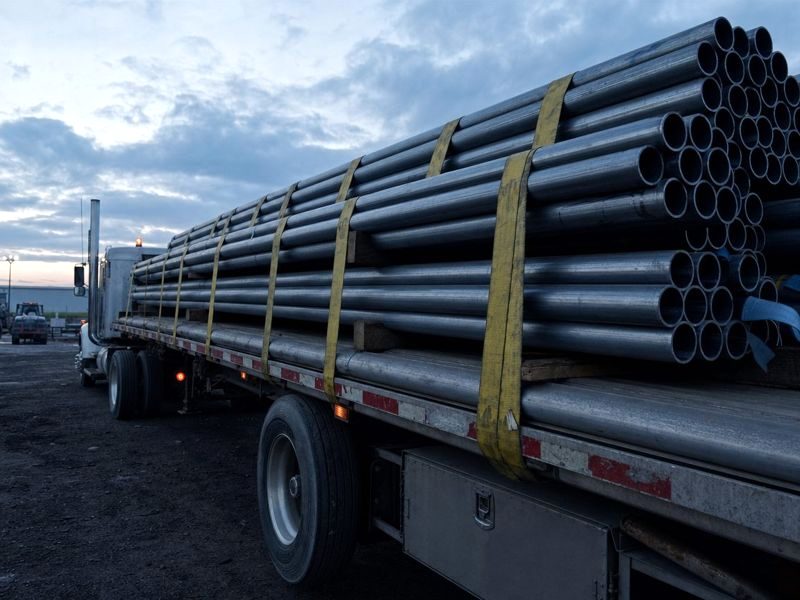 Motor truck cargoPays for the load you haul if it is damaged or stolen. Most brokers ask for $100,000.
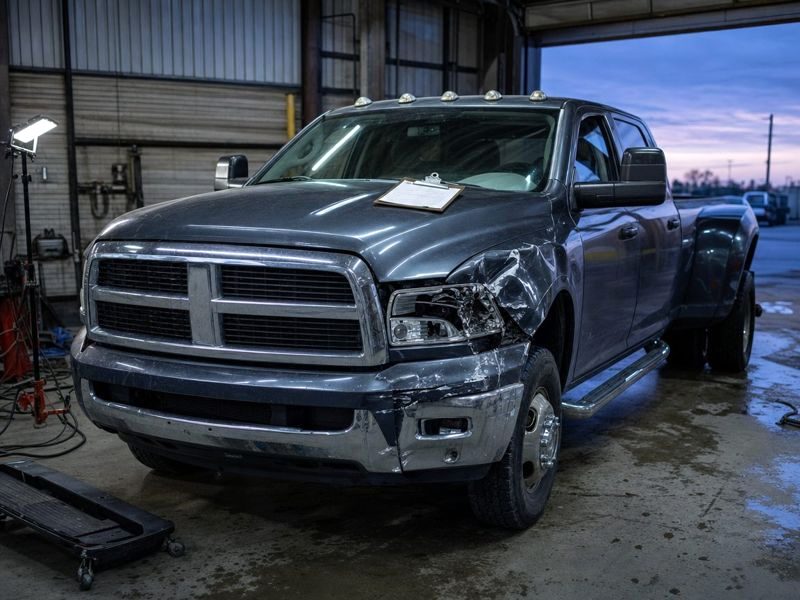 Physical damageRepairs or replaces your own truck and trailer after a crash, fire or theft.
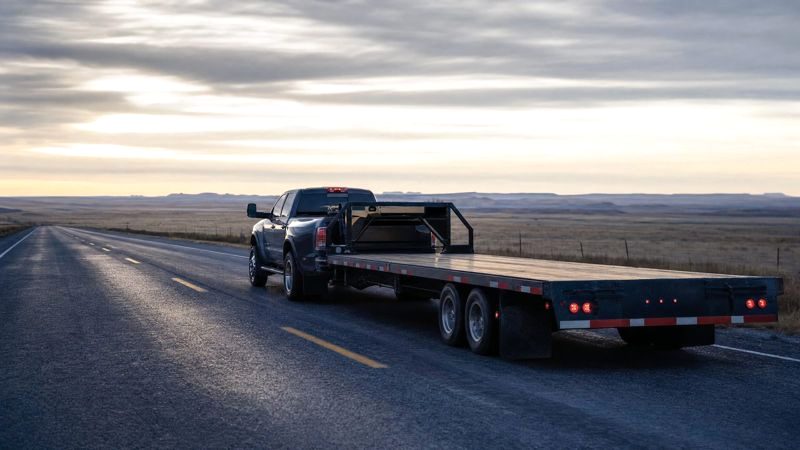 Non-trucking liabilityCovers a driver working for a trucking company who uses the truck between loads, off the job.
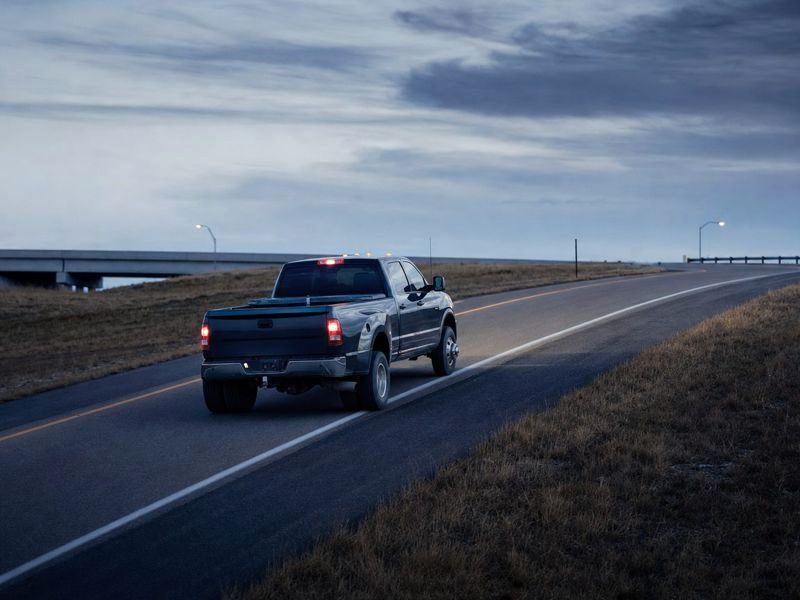 BobtailCovers a truck you drive for a trucking company when it has no trailer, such as a pickup heading home after dropping a load.
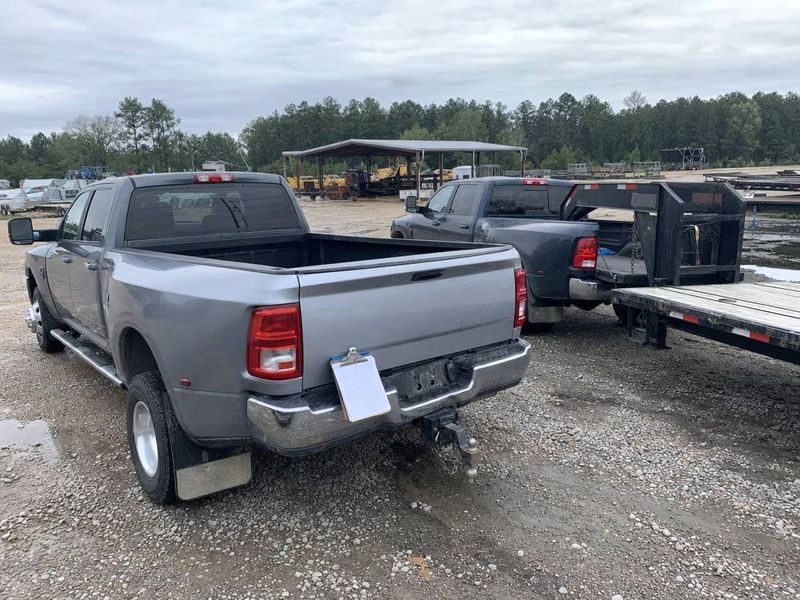 Trailer interchangePays for damage to a trailer you pull for someone else under a written trailer-sharing agreement.
- Out-of-state vehicles: A truck brought in from another state must have its VIN inspected through Form VP 015.
- Trucks over 55,000 pounds: Pay the Heavy Vehicle Use Tax to the federal government before you register in Nevada.
- Over-dimensional or overweight loads: Permits come from the Nevada Department of Transportation for loads wider than 8 feet 6 inches or heavier than 80,000 pounds. You have to get the permit before you enter or travel in Nevada.
- Hazardous materials: Commercial safety and traffic laws are enforced by the Nevada Highway Patrol, which also issues permits for hazardous materials under NRS 706.173.
- Hauling between states: Any truck at 10,001 pounds or above must carry IRP apportioned plates, which divide registration fees among the states on your routes. Once a truck hits 26,001 pounds or 3 axles, IFTA quarterly fuel tax returns are also required, detailing the mileage driven in each state. And since Nevada does not participate, every interstate carrier must complete Unified Carrier Registration in a state that does.
Where do Nevada trucking insurance limits change for interstate loads?
Once you cross a state line in a vehicle rated 10,001 pounds or more, the Federal Motor Carrier Safety Regulations apply to you. Proof of liability coverage must go to the Federal Motor Carrier Safety Administration on Form BMC-91 or BMC-91X, filed by the for-hire carrier's insurer (a BMC-82 bond works instead).
Freight brokers including C.H. Robinson ask carriers for auto liability of $1,000,000 and cargo liability of $100,000, even if federal law calls for $750,000. Our advice: have a trucking insurance agent price your legal minimum along with the $1,000,000 coverage brokers expect.
| Operation or load type | Truck weight or fleet rule | Minimum liability coverage |
|---|---|---|
| Nevada base auto minimum | Any motor vehicle registered in Nevada | $25,000 each person / $50,000 each accident / $20,000 property damage |
| Interstate for-hire general freight | Fleet with only vehicles under 10,001 lbs | $300,000 |
| Interstate for-hire general freight | Vehicle rated 10,001 lbs or more | $750,000 |
| Interstate for-hire hazardous materials | Oil, hazardous waste, or placarded loads | $1,000,000 |
| Interstate high-risk hazardous materials | Poison gas, explosives, radioactive materials, or bulk tanks (both for-hire and private) | $5,000,000 |
| Typical freight broker requirement | Standard broker contract (such as C.H. Robinson) | $1,000,000 auto liability and $100,000 cargo |
Questions people ask
In Nevada, can a fleet self-insure its trucks?
Yes. Registering more than 11 vehicles in the state lets an individual or business apply for self-insurer status. For 11 vehicles or fewer, you must buy your Nevada policy from an insurance company, and every cab needs proof inside.
Who qualifies for a permanent trailer plate in Nevada?
A permanent trailer plate costs a one-time $115 fee, and it remains valid while you own the trailer. A full trailer must be towed with a drawbar, not a 5th wheel or a ball hitch, to qualify.
Is commercial registration required for private heavy trucks or special mobile equipment?
Private non-commercial vehicles at 26,001 pounds or more can skip the Motor Carrier Division and register at regular DMV offices. Vehicle registration doesn't apply to special mobile equipment at all, and fuel taxes may not apply either.
Sources
- New Motor Carriers (dmv.nv.gov)
- Financial responsibility, minimum levels (49 CFR 387.9)
- Nevada Liability Insurance Requirements (dmv.nv.gov)
- Motor Carrier Regulations (dmv.nv.gov)
- NRS chapter 706 (leg.state.nv.us)
- Nevada Division of Insurance (doi.nv.gov)
- Motor Carrier (dmv.nv.gov)
- Insurance filing requirements (FMCSA)
Related
Insuring a truck in Nevada
A trucking agent who places policies in Nevada can quote it by phone, or you can send your details.
A quote costs nothing, and you do not have to buy.