Trucking insurance in Illinois
$750,000 Minimum interstate liability for trucks 10,001 pounds or more
Filings required for Illinois intrastate for-hire carriers.
ilga.govIntrastate cargo limit for farm, milk, livestock, and dump loads.
ilga.govBase Illinois auto liability minimums for injury and property.
idoi.illinois.govMonthly cost, national figures
$665 to $1,165 a month for an established hotshot with a clean record (Trucking Insurance Services)
$1,000 to $1,800 in the first two years of a new MC number (Trucker Path Insurance)
What moves the priceOwn MC number
$300 for the OP-1 application; you name a BOC-3 process agent, UCR is $55 a year for 0 to 2 trucks, more for bigger fleets (UCR Plan), and your insurer files the BMC-91X within 20 days of FMCSA Register publication.
New authority checklistFor local for-hire loads, trucking insurance Illinois regulators accept begins with a Form E filing to the state. Crossing state lines in a truck rated 10,001 pounds or more calls for federal liability of at least $750,000. When your for-hire property hauling stays entirely within the state, your operating certificate falls under the Illinois Commerce Commission, which also requires coverage from a state-approved insurer. To submit these filings in the right order, it helps to talk with a commercial trucking agent.
Illinois intrastate trucking insurance requirements
When both the pickup and the drop-off stay within state borders, that freight hauling is known as intrastate commerce. If you haul property (other than household goods) for pay within Illinois, you must obtain a Public Carrier Certificate through the Illinois Commerce Commission.
Illinois Motor Carrier Safety Law rules make a vehicle or combination a commercial motor vehicle once its gross weight or weight rating reaches 10,001 pounds or more. That applies to both intrastate and interstate operations. Illinois brings the federal rules for financial responsibility in 49 CFR Part 387 into state law by reference. For property carriers, it sets minimum public liability and property damage limits at the 49 CFR 1043.2 levels.
Mandatory Illinois auto minimums come from the Illinois Department of Insurance for ordinary road use. Bodily injury is $50,000 for a crash and $25,000 for each person hurt. Property damage is $20,000 for a crash; uninsured motorist bodily injury uses the same $25,000 and $50,000 amounts. Illinois does not require trailers to carry liability coverage. A commercial truck agent who writes policies daily can match the exact state requirement to your weight rating.
Filings and cargo rules for Illinois trucking insurance
The Illinois Commerce Commission grants your operating certificate, and it stays valid only while you keep meeting the required insurance or bond filings. If a carrier is based and authorized in Illinois for intrastate work, Illinois administrative rules require coverage from an admitted insurer, a company the state has approved to sell insurance. (With fewer than 25 vehicles, self-insuring through the commission is possible only after you prove net worth of $500,000.)
Your insurer files Form E with the state as proof of liability coverage, and Form H serves as proof of cargo coverage. Common carriers must carry the cargo minimum set by 49 CFR 1043.2(c). Intrastate carriers moving bulk milk, unprocessed farm goods, ordinary livestock, or dump-type loads need $5,000 per vehicle instead. Skipping cargo insurance is allowed when you file the Cargo Insurance Waiver Affidavit, state that no load exceeds $5,000, and give every shipper written notice. A common carrier must also carry $10,000 in C.O.D. coverage for each shipper or consignee unless that carrier files a C.O.D. That exception is the C.O.D. Bond Waiver Affidavit, which says no C.O.D. loads are accepted. Your dedicated trucking agent checks that the insurer files Form E and Form H by the deadline.
When do you need federal limits on Illinois commercial truck insurance?
Once for-hire freight crosses a state line, federal financial responsibility requirements take effect, and your insurer must file a BMC-82 bond, Form BMC-91, or BMC-91X with federal regulators. Major brokers such as C.H. Robinson want $1,000,000 in auto liability plus $100,000 in cargo. The legal minimum is $300,000 for fleets below 10,001 pounds and $750,000 for general freight rated 10,001 pounds or higher. Agents familiar with freight broker standards can quote the legal floor and a $1,000,000 policy, letting you book loads.
Coverage types in a truck policy
 LiabilityPays for injuries and damage your truck causes to other people. The federal minimum is $300,000 to $5,000,000.
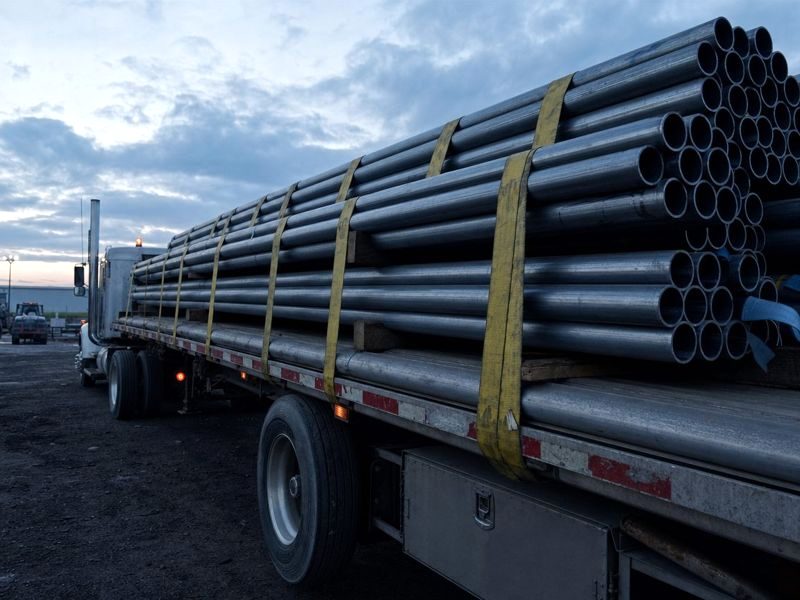 Motor truck cargoPays for the load you haul if it is damaged or stolen. Most brokers ask for $100,000.
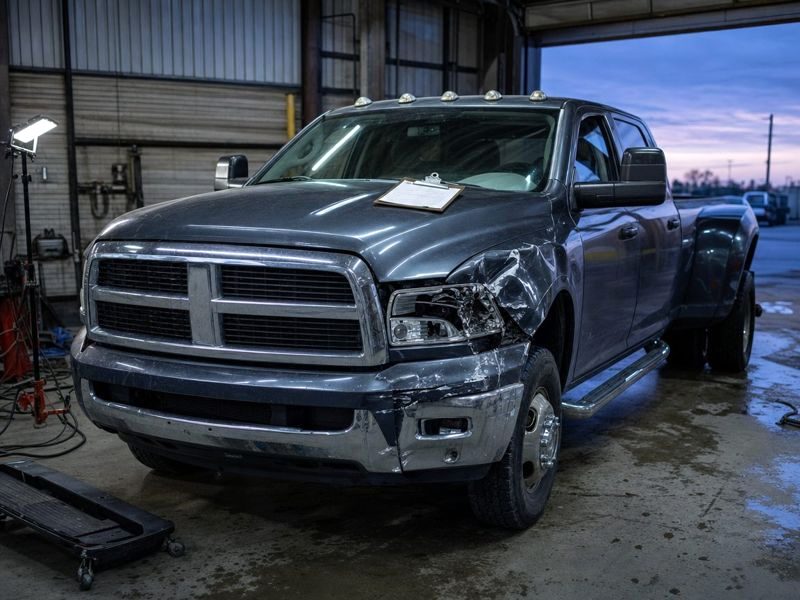 Physical damageRepairs or replaces your own truck and trailer after a crash, fire or theft.
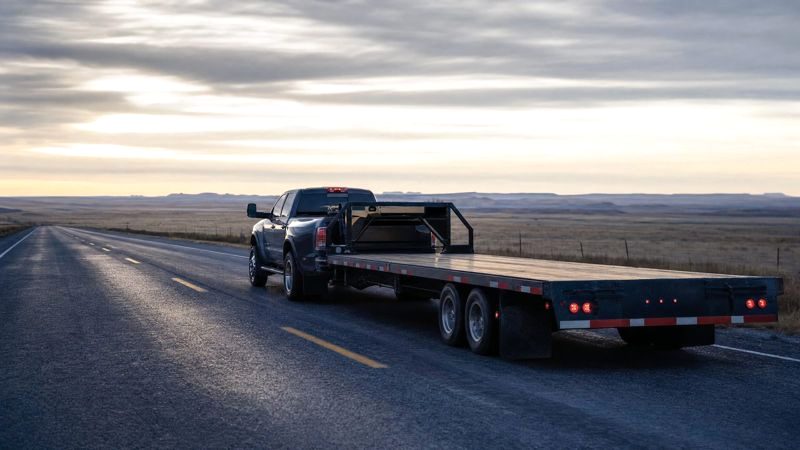 Non-trucking liabilityCovers a driver working for a trucking company who uses the truck between loads, off the job.
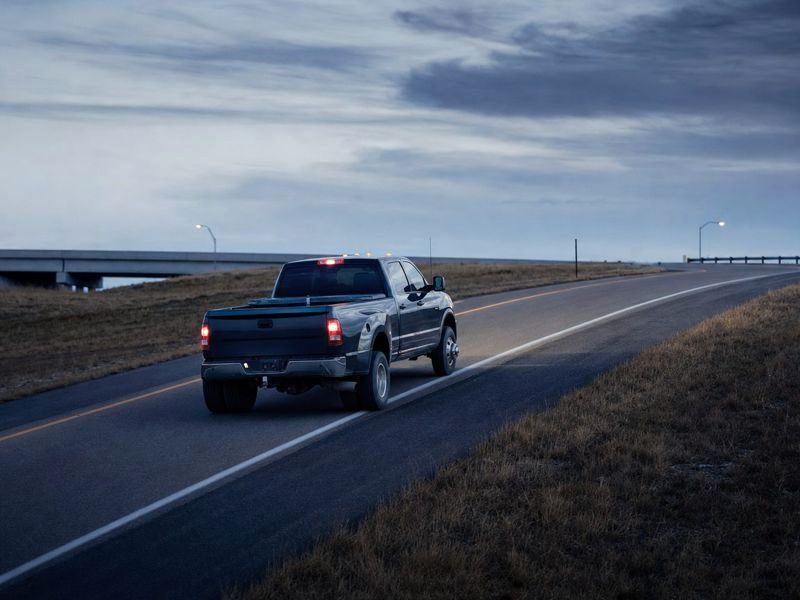 BobtailCovers a truck you drive for a trucking company when it has no trailer, such as a pickup heading home after dropping a load.
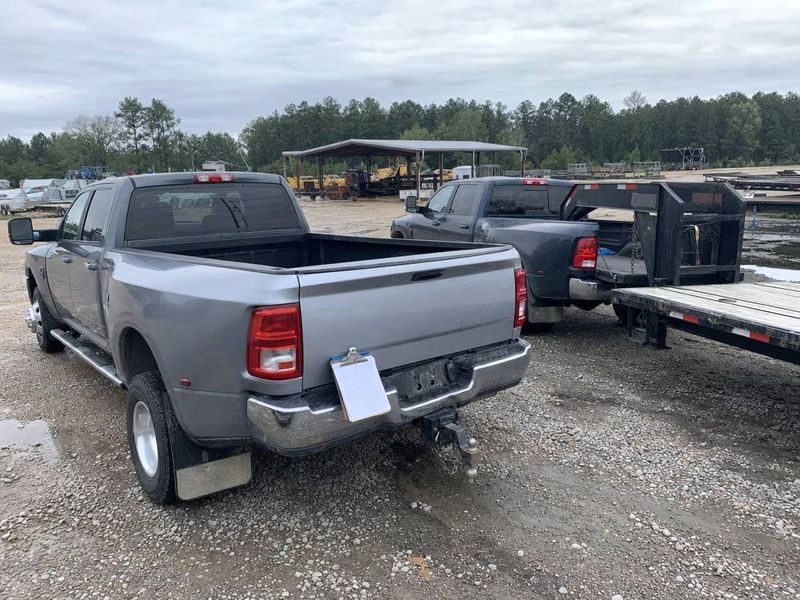 Trailer interchangePays for damage to a trailer you pull for someone else under a written trailer-sharing agreement.
| Operation or cargo type | Minimum liability limit | Required filing |
|---|---|---|
| Illinois base auto (non-for-hire) | $25,000 person / $50,000 crash / $20,000 property | Standard Illinois proof of insurance |
| Intrastate for-hire property | 49 CFR 1043.2 sets it ($5,000 for farm or dump cargo) | Form E and Form H |
| Interstate for-hire fleet under 10,001 lbs | $300,000 | Form BMC-91 or BMC-91X |
| Interstate for-hire non-hazardous (10,001 lbs+) | $750,000 | Form BMC-91 or BMC-91X |
| Interstate hazmat (placarded, oil, waste) | $1,000,000 | Form BMC-91 or BMC-91X |
| Explosives, poison gas, radioactive, bulk hazmat | $5,000,000 | Form BMC-91 or BMC-91X |
Apportioned plates and truck registration in Springfield
With apportioned plates, a truck can run across 2 or more member states, and registration fees get split according to miles driven. Only the Commercial and Farm Truck Division in Springfield sells apportioned plates. From April 1, 2026, Illinois takes renewals online only. Apportion any vehicle over 26,000 pounds, or any power unit with at least 3 axles, once it runs across at least 2 jurisdictions. (The state also says commercial vehicles below 26,000 pounds working intrastate across at least 2 jurisdictions must apportion.) Have a trucking insurance agent review your registration plan; that check confirms your coverage fits your plate weight.
- New applicants need a USDOT number (their own or the safety carrier’s) and secured funds covering 3 full years. They also need the receipted Form 2290 Schedule 1 when a truck at 55,000 pounds or more was bought over 60 days earlier.
- Apportioned tow trucks fall under special insurance rules.
- Pay renewal invoices before April 1 (unused time gets no refund), or, with your original invoice and file in good standing, buy a 45-Day Temporary Apportionment Authorization Permit.
- The Illinois share of 10-, 11-, or 12-month registrations may be paid in installments, with the final payment due by October 1.
- For trucks that stay in-state, fiscal Flat Weight Tax Registrations work with no USDOT number currently required. Choosing Mileage Tax Registration instead means posting $500 as a surety bond and giving up out-of-state trips.
Questions people ask
How much can Illinois fine you for operating a truck without insurance?
Illinois mandatory insurance laws set a minimum $500 fine for operating an uninsured vehicle. If you drive during a suspension caused by having no insurance, the minimum fine becomes $1,000. To get the registration back, you must show liability proof and pay a $100 reinstatement fee.
At what point must you file a crash report in Illinois?
A crash report must go to the Illinois Department of Transportation after any accident that hurts someone or causes more than $500 in damage. With your commercial insurance card kept in the cab, policy details are easier to report accurately.
Do Illinois intrastate farm trucks fall outside hours-of-service requirements?
Yes. Illinois does not impose federal Part 395 hours-of-service rules on intrastate agricultural operations that Section 18b-101 defines. For intrastate carriers, Illinois also leaves out Section 391.11, paragraph (b)(1). For those carriers, Section 393.93 does not apply to vehicles built earlier than June 30, 1972.
Sources
- Illinois Administrative Code (ilga.gov)
- Financial responsibility, minimum levels (49 CFR 387.9)
- Auto Insurance Shopping Guide (idoi.illinois.gov)
- Public Carrier Certificate (illinois.gov)
- 625 ILCS 5/ Illinois Vehicle Code (ilga.gov)
- Insurance filing requirements (FMCSA)
- Carrier Resources: FAQs (C.H. Robinson)
- Security for the protection of the public: Minimum limits (49 CFR 387.303)
Related
Insuring a truck in Illinois
A trucking agent who places policies in Illinois can quote it by phone, or you can send your details.
A quote costs nothing, and you do not have to buy.