Livestock hauler insurance
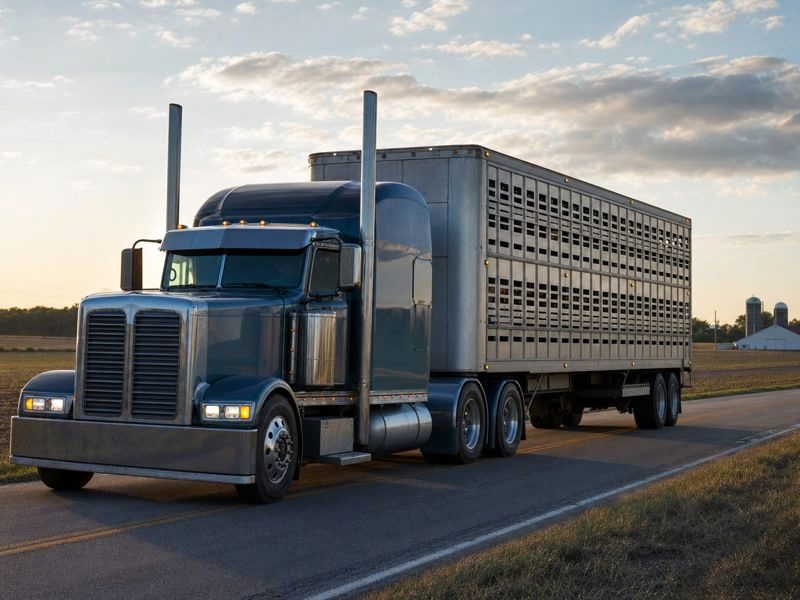
If someone pays you to haul their animals across state lines in a truck or trailer rated 10,001 lbs or more, federal law requires at least $750,000 in livestock hauler insurance for liability. That is the rule for liability to other people, not insurance on the animals. The 10,001 lbs figure is your vehicle's rated maximum weight, not the weight of the animals on a particular trip. Livestock is exempt from federal operating authority, yet the insurance minimum still applies.
- Minimum federal liability: $750,000
- Applies at a vehicle weight rating of: 10,001 lbs
- Federal cargo insurance required for livestock: $0
- Proof to carry: Form MCS-90
Minimum federal liability for interstate for-hire trucks at 10,001+ lbs.
49 CFR 387.9Vehicle weight rating where the $750,000 federal rule starts.
FMCSAFederal cargo insurance requirement for nonhazardous livestock loads.
FMCSAProof of liability form kept by exempt livestock carriers.
FMCSAWho does the $750,000 rule cover?
Federal rules apply this minimum to for-hire carriers. These are carriers who move nonhazardous property in interstate or foreign commerce using vehicles with a weight rating of 10,001 lbs or more. Livestock is treated as nonhazardous property.
The term "for-hire" has a precise meaning. Federal rules define it as carrying the goods or property of someone else in exchange for payment. So if a rancher hires you to haul their cattle, you are hauling for hire.
Farmers hauling their own animals
If you only haul your own animals, you aren't hauling for hire, so this federal $750,000 minimum isn't aimed at you. Your state may still have its own rules, so it's worth checking.
If every trip stays inside one state, that state sets your liability minimum and the paperwork, often a Form E your insurer sends in.
What the livestock exemption covers and leaves out
Some new haulers hear about the livestock "exemption" and think they can skip buying commercial coverage. Ordinary livestock is exempt under federal law, but only from rules "under this part." The law covered by that phrase addresses for-hire registration and operating authority only, so many other federal trucking rules still apply.
What the exemption takes away:
- Operating authority. Many paid interstate carriers need this federal permit, known as an MC number. FMCSA says carriers that haul only exempt commodities do not need one.
- The insurance filing requirement. FMCSA notes that carriers moving exempt commodities do not file proof with FMCSA, so no proof of coverage is sent in for you.
What the exemption still requires:
- The coverage itself. FMCSA says these carriers still fall under the federal insurance rules and must carry at least $750,000 in liability.
- Proof to carry. You keep Form MCS-90, an endorsement that attaches to your liability policy and shows that your coverage satisfies what federal law requires.
FMCSA says the $750,000 minimum for exempt-commodity carriers applies to vehicles rated 10,001 lbs or more. Different federal minimums may apply to lighter for-hire vehicles.
Coverage types in a truck policy
- LiabilityPays for injuries and damage your truck causes to other people. The federal minimum is $300,000 to $5,000,000.
- Motor truck cargoPays for the load you haul if it is damaged or stolen. Most brokers ask for $100,000.
- Physical damageRepairs or replaces your own truck and trailer after a crash, fire or theft.
- Non-trucking liabilityCovers a driver working for a trucking company who uses the truck between loads, off the job.
- BobtailCovers a truck you drive for a trucking company when it has no trailer, such as a pickup heading home after dropping a load.
- Trailer interchangePays for damage to a trailer you pull for someone else under a written trailer-sharing agreement.
Federal liability minimums for different loads and vehicle weights
| Type of hauler | Rated vehicle weight | Federal liability minimum |
|---|---|---|
| For-hire carriers moving nonhazardous property, livestock included | 10,001 lbs and above | $750,000 |
| For-hire carriers whose fleet includes only lighter vehicles | Below 10,001 lbs | $300,000 |
| Placarded hazmat, oil, or hazardous waste hauled for hire | 10,001 lbs and up | $1,000,000 |
| For-hire or private carriage of explosives, of poison gas, of radioactive materials, or of bulk hazmat in tanks | Any vehicle covered by the rule | $5,000,000 |
The $300,000 amount comes from federal rules. The hazmat amounts are listed on FMCSA's insurance filing chart.
Coverage for the animals you haul
For nonhazardous property, federal law sets no cargo insurance requirement, so animal coverage is your choice. Even though the law doesn't ask for it, the people who hire you may want to know their animals are protected, so it's worth asking an agent about it.
A standard cargo policy may not suit a load like this. Joe Morten & Son, a trucking agency, explains that standard motor truck cargo policies normally cover property, not live animals. It suggests asking an agent how a policy handles death, injury, animal welfare and shrink, which is the weight animals lose on the road.
Livestock transit coverage exists for this need. The Insurance Store calls it the coverage that pays out when livestock are hurt or killed while being transported. The Hartford's livestock coverage provides broad-perils protection for death and crippling during transit.
The Hartford's livestock transit flyer includes these optional extras:
- Carcass removal: covers the cost of removing animals that die of a covered cause.
- Refusal of shipment: pays for lost value when the receiver turns down the whole load due to a covered cause.
- Substitution of vehicles: adds a temporary replacement vehicle to the coverage.
Progressive Commercial mentions moving livestock on its farm trucks page, but that page does not describe a separate livestock hauler policy.
Additional insurance for your truck
A full insurance setup usually goes beyond liability and animal coverage:
- Physical damage: ask an agent what coverage is available for damage to your truck and trailer, and which losses it covers.
- General liability: covers claims that have nothing to do with driving. For this cover, hotshot businesses pay on average $32 a month.
- Non-trucking liability or bobtail: meant for drivers who are leased on to a carrier. While you're under dispatch the carrier's own filing protects you, and this policy steps in when you're not under dispatch.
Other truck types
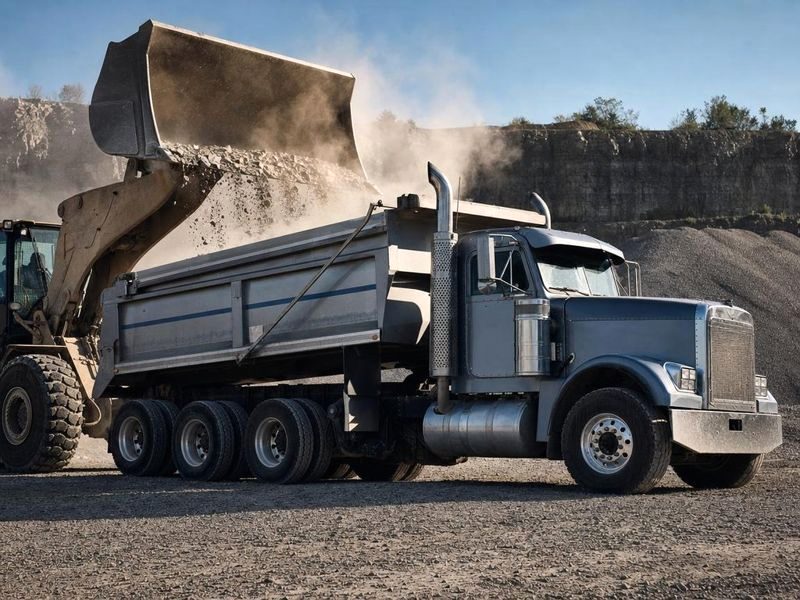 Dump truck insuranceTrucks that haul gravel, dirt and debris
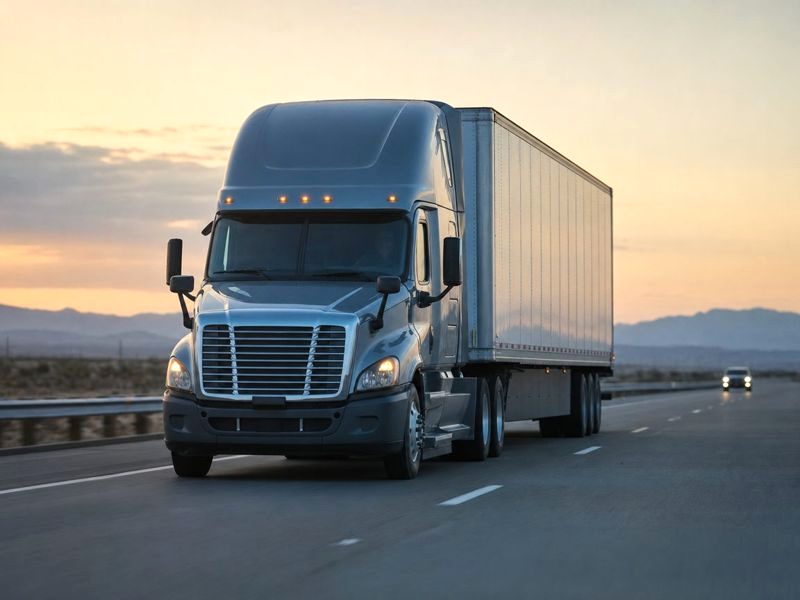 Semi truck insuranceTractor-trailers, also called 18-wheelers
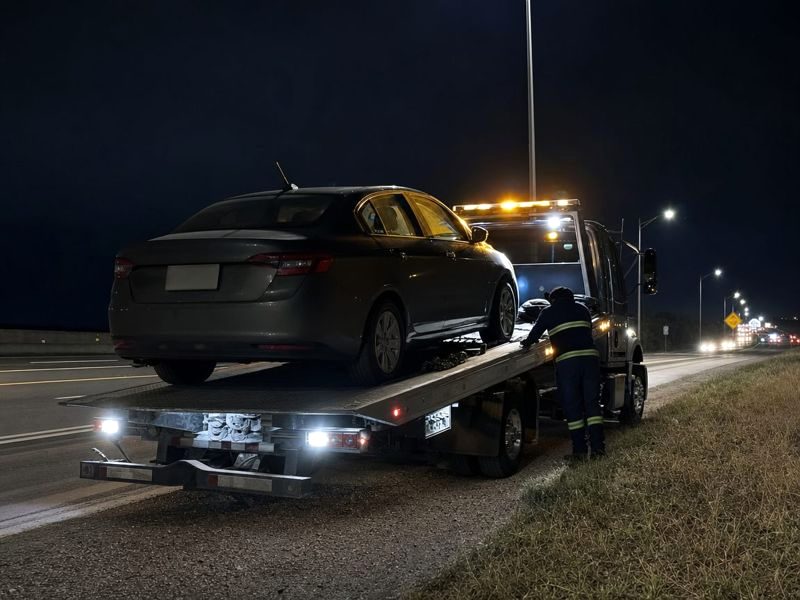 Tow truck insuranceTow trucks and the cars they tow
Insurers that write small trucks and hotshots



One independent agent can quote several of these for the same truck. Logos belong to their owners; none of these companies runs this site.
Questions haulers ask
What does it cost to insure a livestock hauling truck each month?
None of our sources lists a price for livestock hauler insurance. For general trucking, hotshot truckers pay around $896 a month for commercial auto insurance, but that is not a livestock figure. Your own price will depend on your truck, your routes and your record, so it's worth getting a quote. Across the country, Progressive Commercial's national truck averages ran from $734 to $926, and the figure shifts with the kind of trucker.
Would $1,000,000 in liability suit better than $750,000?
The law sets the minimum at $750,000, though load boards and brokers sometimes request higher limits. If you also take loads through brokers, many of them, including C.H. Robinson, TQL and Amazon Relay, ask for $1,000,000 in auto liability and $100,000 in cargo cover, so a higher limit can open more of those loads. J.B. Hunt lists the federal liability minimum for carriers and notes that brokers may require more.
Is a USDOT number required for livestock hauling?
Any commercial vehicle with a weight rating of 10,001 lbs or above that hauls interstate needs a USDOT number. The USDOT number rule is based on vehicle weight and interstate travel, so a rig rated 10,001 lbs or more generally needs one even when no MC number is required.
Hauling livestock alongside other freight
The MC number exemption applies only to carriers that haul exempt commodities and nothing else. If you also haul regulated freight for pay, you'll need your own operating authority, which has a one-time FMCSA fee of $300, and your insurer files proof of your coverage with FMCSA.
Hotshot Insure does not sell or quote insurance, but our phone line reaches an independent insurance agent who writes trucks.
Sources
- Financial responsibility, minimum levels (49 CFR 387.9)
- If i have company doesnt have authority and transporting exempt commodities wheat am i required (FMCSA)
- Insurance filing requirements (FMCSA)
- Section 387.5 (49 CFR 387.5)
- Section 387.3 (49 CFR 387.3)
- 13506 (law.cornell.edu)
- What operating authority mc number and who needs it (FMCSA)
- Security for the protection of the public: Minimum limits (49 CFR 387.303)
Related
Get your rig priced by an agent
Hotshot Insure does not sell insurance. An independent agent who places hotshot and small truck policies prices your rig by phone, or you can send your details.
A quote costs nothing, and you do not have to buy.