
Box truck insurance
Box truck insurance for for-hire trucks rated 10,001 lbs or more that carry non-hazardous freight between states must include at least $750,000 in liability coverage. What you actually pay, and the full coverage you need, comes down to your truck's size, what you haul, and the distance you run.
- Least liability at 10,001 lbs and above: $750,000
- Least liability for fleets under 10,001 lbs: $300,000
- Broker limits often requested: $1,000,000 auto liability and $100,000 cargo
- Typical commercial auto price for hotshot operators: $896 a month
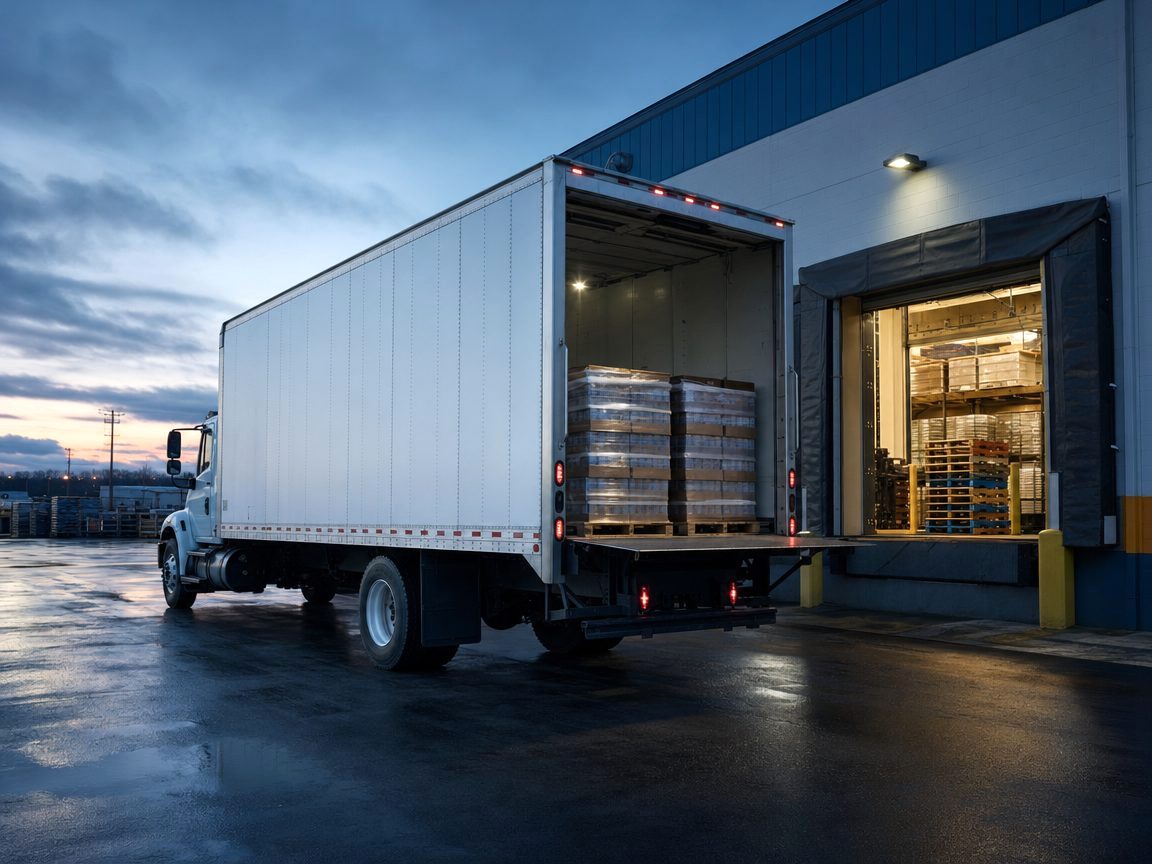
What box truck coverage costs?
What you pay is shaped by the freight you carry, how far you drive, and how big your truck is. Progressive Commercial gives lower premiums to drivers with safe records and to customers who carry more than one policy.
To give you a ballpark, the national average monthly truck insurance cost from Progressive Commercial starts at $734 for specialty truckers and reaches about $926 for transport work. Insureon puts hotshot commercial auto at about $896 a month, which works out to $10,757 a year for commercial auto coverage. General liability insurance averages $32 a month for hotshot operations.
Keep in mind these figures cover trucking overall. Box truck rates may land elsewhere, so use these numbers as a rough guide.
26 ft box truck insurance
A 26 ft box truck is a big vehicle, and most are rated 10,001 lbs or higher. When you haul non-hazardous freight for-hire over state lines in a truck like this, federal rules call for at least $750,000 in liability.
The size of your truck and what's in it set the coverages you're required to hold. Your insurer sends proof of liability to FMCSA, the federal agency in charge of trucking, using Form BMC-91 or BMC-91X. A vehicle this large must also have a USDOT number, the registration number used for trucks that cross state lines.
Coverage rules for box trucks
What coverage you must hold depends on the kind of business you run and where you run it. A personal auto policy usually won't pay for business driving, which is why a truck used for work often needs commercial auto insurance.
| Who or what is covered | Least liability required |
|---|---|
| Interstate for-hire freight that is not hazardous, rated 10,001 lbs or higher | $750,000 |
| For-hire fleets where every power unit is under 10,001 lbs | $300,000 |
| Placarded hazmat, oil, or hazardous waste at 10,001 lbs or higher | $1,000,000 |
| Explosives, poison gas, radioactive material, or bulk hazmat | $5,000,000 |
Stay within one state, and that state's own liability minimum and filing rules apply.
Many brokers want limits well past the federal floor. C.H. Robinson, TQL, and Uber Freight each ask for $1,000,000 in auto liability plus $100,000 in cargo. Amazon Relay matches that and adds $1,000,000 in general liability per occurrence. Since no federal rule requires cargo insurance for freight carriers, it's the broker who sets the cargo limit.
If you operate under your own authority, budget for a few startup and yearly items:
- Getting operating authority: FMCSA charges $300 once.
- UCR carrier registration: $55 a year for 0–2 power units in the 2027 registration year.
- Proof-of-insurance filing: once FMCSA posts the application, the insurer must file within 20 days or the application is dismissed.
- BOC-3: a process agent files it, listing every state where you run.
Carrying your own goods vs hauling for others
Hauling your own products makes you a private carrier. Liability is the core coverage in this case, and it can cover injuries or property damage to others when the accident is your fault.
When other people pay you to move their freight, you're a for-hire carrier. If the motor carrier you work with supplies liability insurance, you might only have to purchase a few coverages on your own. Leasing on means the carrier's filing protects you during dispatch, while you hold non-trucking liability and physical damage for your truck yourself. Non-trucking liability applies whenever your truck isn't under dispatch.
Protection for the truck and the load
- Physical damage: covers your truck when it’s damaged in a crash.
- Collision: helps pay to fix or replace your truck after it hits another vehicle or an object.
- Comprehensive: handles fire, theft, vandalism, hail, and similar weather or disaster losses.
- Motor truck cargo: covers freight you’re hauling when it’s lost or damaged in events like fire or a crash.
- Medical payments: helps with medical bills for you and your passengers, no matter who caused the wreck.
- UM/UIM: steps in when the driver who caused the crash has no insurance or too little.
Workers' compensation is required in most states when you employ people.
Questions people ask
What does a $1,000,000 liability limit cost monthly?
None of the sources on this page price that limit by itself. Full commercial truck policy averages fall between $734 and $926 monthly, with your rate set by your cargo, your radius, and your truck's size.
Which box truck policy costs the least?
There's no single cheapest policy we can point to. Progressive Commercial can lower premiums for safe drivers and for customers holding several policies.
What are box truck rates per mile?
Rates per mile aren't covered in our sources, so there's no figure we can share.
Sources
Related
Get your rig priced by an agent
Hotshot Insure does not sell insurance. An independent agent who places hotshot and small truck policies prices your rig by phone, or you can send your details.