
Flatbed truck insurance
Liability coverage is the foundation of flatbed truck insurance. If you haul non-hazardous freight for pay across state lines in a truck rated 10,001 lbs or more, federal rules require at least $750,000 in liability. Plenty of brokers ask for more, and your price hangs on your truck, your freight, and the coverage you pick.
- Minimum federal liability for trucks 10,001 lbs and heavier: $750,000
- Minimum for fleets running only trucks below 10,001 lbs: $300,000
- What most brokers ask for: $1,000,000 in liability plus $100,000 in cargo
- Average hotshot commercial auto premium: $896 per month
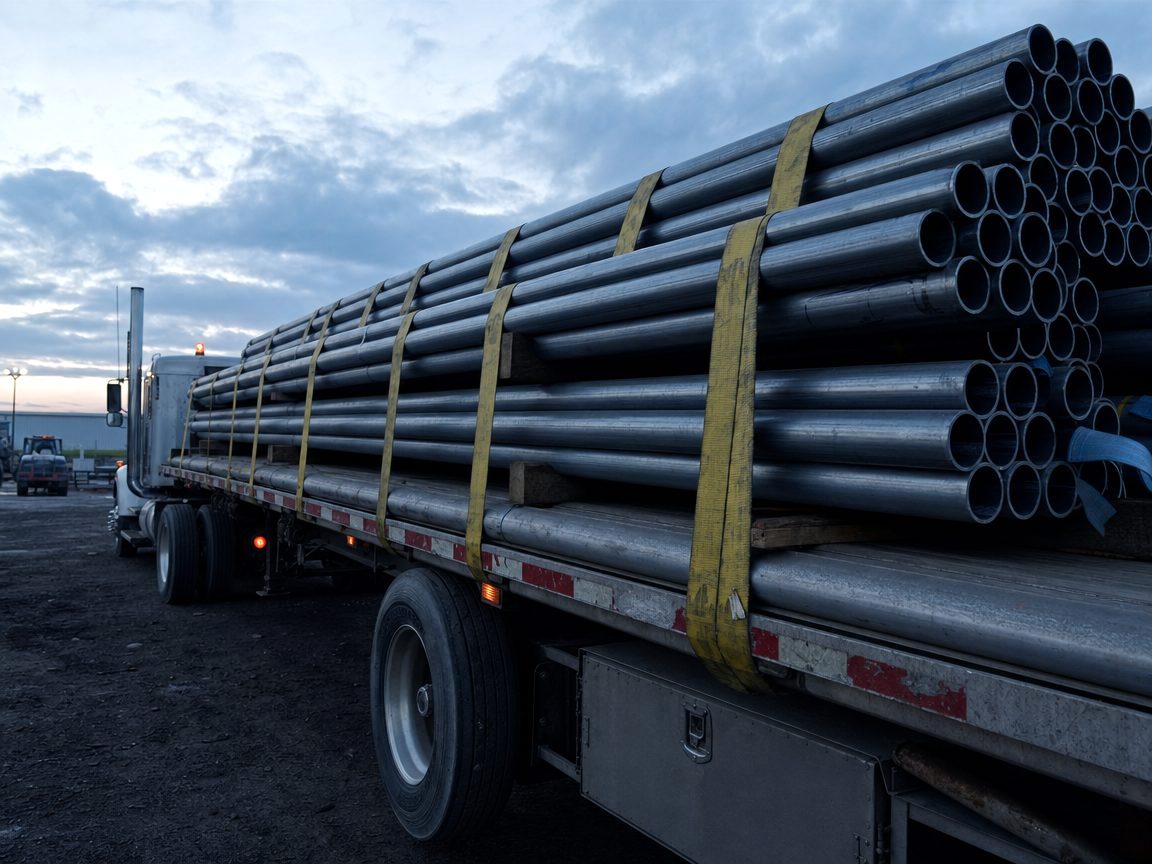
Common flatbed coverages
Liability coverage is something every flatbed trucker needs, since it protects other people and their property when you cause a crash. Progressive Commercial says it can pay their medical bills and fix the damage you do to their cars or belongings. Other coverages, such as collision and uninsured motorist, help with your own truck and injuries.
A personal auto policy generally won't cover work use, so once you haul freight for money you may need a commercial policy. Here are the main coverages you can add:
- Uninsured or underinsured motorist: steps in if another driver hurts you or damages your flatbed and lacks enough liability insurance.
- Collision: covers repair or replacement of your truck after a crash, even when you're at fault.
- Comprehensive: covers the truck for theft, vandalism, and other harm not caused by a collision.
- Cargo: pays for goods damaged while being transported, plus debris removal if cargo spills or falls off.
- Roadside assistance: gives you towing, battery jumpstarts, and winching at any hour.
- Rental reimbursement with downtime: covers a rental truck while your flatbed is sidelined after a crash or breakdown, or makes up for the income you lose when no good replacement can be found.
- General liability: pays for injuries or damage you cause away from driving, like during loading or unloading.
The law doesn't require general liability. You can buy it as its own policy or bundle it into your commercial auto coverage. A business owners policy rolls general liability and property coverage into one package.
Coverage your lender or state may require
When your flatbed is leased or financed, collision coverage is required by many lenders. Your lender may ask for comprehensive coverage too, so check your loan or lease terms before you buy.
If you have employees, most states require workers' compensation. It pays when someone gets hurt or sick on the job, and it can also protect you from related lawsuits.
Federal liability minimums by truck and freight
A for-hire carrier is an individual or business paid to haul freight that belongs to someone else. The lowest liability limits these carriers can hold are set by the FMCSA, the federal trucking safety agency. A placarded load is hazardous freight that must display warning signs on the truck's exterior.
| Your truck and freight | Lowest liability allowed |
|---|---|
| Fleet running only trucks below 10,001 lbs with non-hazardous freight | $300,000 |
| A truck rated 10,001 lbs or heavier hauling non-hazardous freight between states | $750,000 |
| Truck of 10,001 lbs or more carrying placarded shipments, oil, or hazardous waste | $1,000,000 |
| Explosives, poison gas, radioactive material, or hazardous substances carried in bulk tanks | $5,000,000 |
You don't file the paperwork yourself. Your insurer sends proof of coverage to the FMCSA on a standard federal form, and your policy needs a federal add-on called the MCS-90. When you haul only within one state, the minimum is set by that state, and your insurer often files a state form for you.
Broker insurance requirements
A lot of freight comes through brokers, and the limits they want are higher than what the federal government requires.
| Broker | Cargo they require | Liability they require |
|---|---|---|
 C.H. Robinson | $100,000 | $1,000,000 |
 TQL | $100,000 | $1,000,000 |
 Uber Freight | $100,000 | $1,000,000 |
 Amazon Relay | $100,000 | $1,000,000 per occurrence |
 J.B. Hunt | No federal cargo requirement for freight carriers | Federal liability minimum; brokers may ask for more |
Uber Freight also requires general liability of $1,000,000. Amazon Relay asks for even more: $1,000,000 of general liability per occurrence and $2,000,000 overall, plus $50,000 to replace a trailer and $100,000 of employer liability.
Flatbed truck insurance cost
On average, hotshot truckers pay $896 a month, which comes to $10,757 a year, for their commercial auto coverage. For hotshot businesses, general liability averages $32 a month.
What you pay depends on your flatbed type, how many trucks you insure, and your freight. Your chosen coverages and limits matter as well. Heavy haul flatbed insurance runs higher, and added coverages like cargo raise the price too.
How to pay less
Progressive Commercial names several things that can earn you a lower rate:
- Keeping your driving record clean
- Paying for the policy in full up front
- Trucks with safety equipment like anti-lock brakes and airbags
- Letting Progressive track your driving through its usage-based program
Questions people ask
How does one company's truck insurance price compare with another's?
The national average monthly truck insurance cost from Progressive Commercial ran anywhere from $734 for specialty truckers up to $926 for transport truckers. The fairest way to find the cheaper option for you is comparing quotes at the same limits.
Is cargo insurance required by law?
Freight carriers face no federal cargo insurance requirement; only household goods movers do. Even so, several large brokers, including C.H. Robinson, TQL and Uber Freight, ask for $100,000 in cargo coverage.
What happens if I'm leased on to a carrier?
While you're under its dispatch, the carrier's filing covers you. The lease must give the carrier sole possession, control, and use of your truck while it's in effect. You usually carry non-trucking liability, which covers you when you use the truck off duty or for personal reasons, along with physical damage coverage on the truck you own.
What other costs come with getting my own authority?
Every operating authority, or MC number, carries a one-time FMCSA fee of $300. For 2027, Unified Carrier Registration (UCR) runs $55 if your fleet has 0 to 2 trucks. Once your application is published, the insurance form must be filed by your insurer within 20 days, or the application is dismissed.
Sources
- Security for the protection of the public: Minimum limits (49 CFR 387.303)
- Financial responsibility, minimum levels (49 CFR 387.9)
- Insurance filing requirements (FMCSA)
- Flatbed Truck Insurance (Progressive Commercial)
- Carrier Resources: FAQs (C.H. Robinson)
- FAQs (TQL)
- Uber Freight Broker and Motor Carrier Agreement for United States and Canada (uber.com)
- Frequently Asked Questions (Amazon Relay)
Related
Get your rig priced by an agent
Hotshot Insure does not sell insurance. An independent agent who places hotshot and small truck policies prices your rig by phone, or you can send your details.