Sprinter van insurance
Sprinter van insurance for hauling freight starts with one number: your van's weight rating. Federal rules shift at 10,001 pounds. Here are the amounts first-time owners ask about most often. - Federal liability minimum for a van rated below 10,001 pounds: $300,000
- Federal floor for liability, van 10,001 lb or more: $750,000
- Typical broker ask before booking: $1,000,000 liability, plus $100,000 cargo
- A broker's 2026 estimate of monthly premiums: $120 to $800 or more per van
Federal liability listed for for-hire fleets under 10,001 lb.
49 CFR 387.303Federal liability minimum from 10,001 lb for non-hazardous freight.
49 CFR 387.9Primary liability most shippers and freight brokers require.
DATFederal liability minimum for for-hire passenger vans.
49 CFR 387.303Where your Sprinter lands on the weight scale
Each van carries a gross vehicle weight rating, which the manufacturer sets as the heaviest the van can weigh when loaded. Trucking regulations use that rating rather than the van's weight on any particular day.
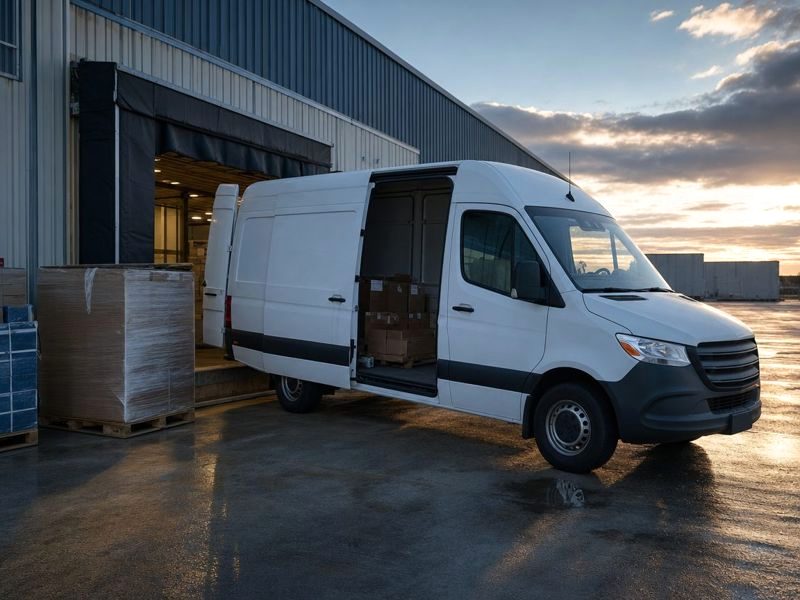
Mercedes-Benz offers Sprinter cargo vans that sit on either side of the 10,001 pound threshold. The 3500, for example, comes in 11 pounds below it, so checking the rear badge will not tell you enough. People now use the name loosely for nearly every cargo van, so check the rating on your own van.
| Sprinter cargo model | Highest rating Mercedes lists | Federal minimum, interstate for-hire freight |
|---|---|---|
| 2500 | 9,050 pounds | $300,000 |
| 3500 | 9,990 pounds | $300,000 |
| 3500XD | 11,030 pounds | $750,000 |
| 4500 | 12,125 pounds | $750,000 |
The $300,000 minimum is available when every vehicle in your fleet has a rating under 10,001 pounds and you haul non-hazardous freight for pay, as set out in 49 CFR 387.303. Once a van reaches 10,001 pounds or above, freight of that same kind moved across state lines requires $750,000 under 49 CFR 387.9. Interstate work also requires a USDOT number for any van whose rating reaches 10,001 pounds or higher.
Commercial insurance for a Sprinter van
Most business auto policies are built around primary liability. This coverage handles injuries and damage you cause to others in a crash, and it draws the most attention from regulators and brokers.
Hauling another company's goods for pay makes you a for-hire carrier, and that is why the federal minimums apply. Still, the legal floor is only where you begin. According to DAT, most shippers and brokers want $1,000,000 in primary liability before handing you a load. The DAT guide itself names $750,000 as the legal floor for a Sprinter and leaves out the weight threshold, so a lighter van may need less by law.
Coverage types in a truck policy
- LiabilityPays for injuries and damage your truck causes to other people. The federal minimum is $300,000 to $5,000,000.
- Motor truck cargoPays for the load you haul if it is damaged or stolen. Most brokers ask for $100,000.
- Physical damageRepairs or replaces your own truck and trailer after a crash, fire or theft.
- Non-trucking liabilityCovers a driver working for a trucking company who uses the truck between loads, off the job.
- BobtailCovers a truck you drive for a trucking company when it has no trailer, such as a pickup heading home after dropping a load.
- Trailer interchangePays for damage to a trailer you pull for someone else under a written trailer-sharing agreement.
Large freight brokers list their requirements publicly, and they look nearly the same across the board:
- Amazon Relay: $1,000,000 in auto liability and $100,000 in cargo, and it also wants $1,000,000 in general liability
- Uber Freight: auto liability of $1,000,000 and cargo of $100,000
- C.H. Robinson: $1,000,000 in auto liability and $100,000 in cargo
- TQL: $1,000,000 in auto liability and $100,000 in cargo
- J.B. Hunt: the $750,000 federal minimum, noting that brokers may set more and that there is no federal cargo requirement
Among the specialized vans it covers, Progressive Commercial includes Sprinter vans. The Hartford also treats Sprinter vans as vans that might need commercial auto coverage, though it sends visitors to Tivly instead of quoting amounts.
If your van stays within a single state, that state sets both the liability minimum and the filing paperwork, often a Form E submitted by your insurer.
Cargo insurance for a Sprinter van
Liability pays for other people. Your freight falls outside that protection. Cargo insurance is a separate policy that pays when the load you carry gets damaged or stolen, and most brokers want $100,000 worth of it.
For general freight, no federal cargo insurance rule exists. Only household goods movers face a federal requirement. Cargo coverage therefore comes from brokers rather than the government, which is why J.B. Hunt lists no cargo requirement while other brokers ask for $100,000.
Should you prefer not to buy a cargo policy for the whole year, DAT offers Loadsure coverage purchased load by load, for loads worth up to $2 million.
Tradespeople run into one gap here. Progressive notes that tools left loose in a van are not covered by a standard van policy, so your own equipment needs separate protection.
Carrying passengers or hazardous loads
Those freight minimums cover non-hazardous goods only. Different uses call for far higher limits.
- For paid passenger service in a van seating 15 or fewer people, counting the driver: $1,500,000
- For paid passenger service in a van with 16 or more seats, counting the driver: $5,000,000
- A van rated 10,001 lb or more carrying placarded hazardous materials, oil, or hazardous waste: $1,000,000
- Explosives, poison gas or radioactive materials, or hazardous substances in bulk tanks, for private and for-hire carriers alike: $5,000,000
For pay, a van built or used to carry more than 8 passengers including the driver also needs a USDOT number, whatever it weighs.
What a Sprinter van policy costs
LogRock, a broker, puts the price of insuring one Sprinter van in 2026 at $120 to $800 or more per month. The company gives no details on how it arrived at that range, so treat the figure as a rough guide, not a quote.
Other truck types
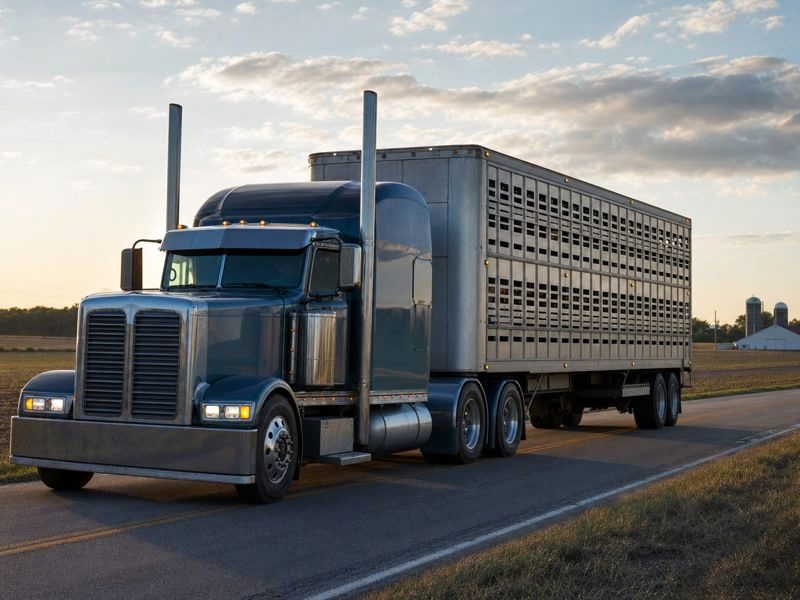 Livestock hauler insuranceCattle and other livestock trailers
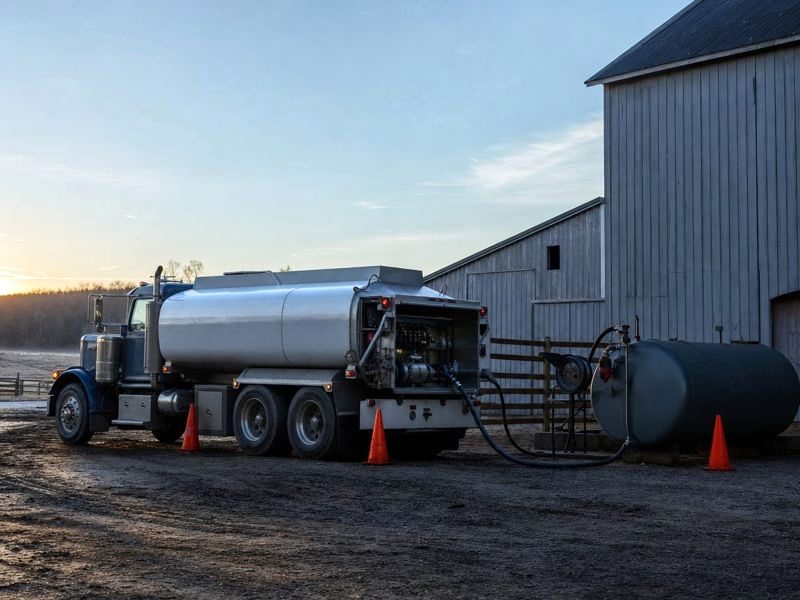 Fuel truck insuranceGasoline, diesel and propane delivery trucks
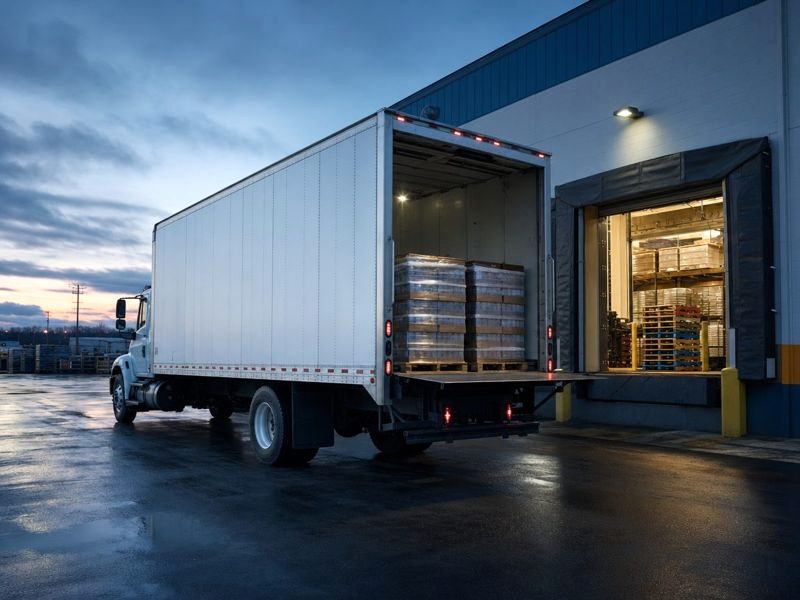 Box truck insuranceStraight trucks with a box body, 16 to 26 feet long
Getting permission to haul across state lines on your own brings a few extra charges:
Filing your liability coverage
Proof of liability reaches FMCSA from your insurer rather than from you, on Form BMC-91 or BMC-91X. The policy must also carry the MCS-90 endorsement that FMCSA requires. Keep the timing in mind. After your authority application is published in the FMCSA Register, the insurer has 20 days to file, and failing to do so gets the application dismissed. Each application also carries a 10-day protest period once it is published.
You will need a Form BOC-3 as well. Only a process agent can submit it for you, and it must name every state where you operate.
Insurers that write small trucks and hotshots



One independent agent can quote several of these for the same truck. Logos belong to their owners; none of these companies runs this site.
Questions owners ask about Sprinter van insurance
What cover do I need when I lease my van to a carrier rather than getting my own authority?
Liability coverage filed by the carrier protects you while you work under its dispatch. You still need non-trucking liability, sometimes called bobtail cover, for the hours you drive away from a job, and you need physical damage cover on your own van. The lease has to hand the carrier exclusive possession, control, and use of the van for the whole term.
Does the Mercedes name change what I have to carry?
It does not. What matters is the weight rating, the cargo, and whether you travel across state lines, not the brand. DAT points out that the term "Sprinter van" started out as a Mercedes-Benz name and today is used loosely for any commercial cargo or crew van, so a van from another manufacturer with the same rating faces the same rules.
How much does a van cost next to a hotshot truck?
Hotshot drivers pay an average of $896 each month, or $10,757 per year, for commercial auto insurance, and general liability adds roughly $32 a month. Across the country, Progressive Commercial's national monthly averages start at $734 for specialty truckers to $926 for transport truckers. We have no reliable side-by-side figure for vans, so get a quote on your own van rather than assuming it will cost less.
Is general liability needed on top of auto liability?
Some brokers ask for it. Amazon Relay wants $1,000,000 each occurrence and $2,000,000 in aggregate, plus $50,000 for trailer replacement and $100,000 for employer liability, while Uber Freight wants $1,000,000 of general liability.
Sources
- Security for the protection of the public: Minimum limits (49 CFR 387.303)
- Financial responsibility, minimum levels (49 CFR 387.9)
- Sprinter van cargo insurance (DAT)
- Cargo van (mbvans.com)
- Do I need a USDOT number? (FMCSA)
- Frequently Asked Questions (Amazon Relay)
- Uber Freight Broker and Motor Carrier Agreement for United States and Canada (uber.com)
- Carrier Resources: FAQs (C.H. Robinson)
Related
Get your rig priced by an agent
Hotshot Insure does not sell insurance. An independent agent who places hotshot and small truck policies prices your rig by phone, or you can send your details.
A quote costs nothing, and you do not have to buy.