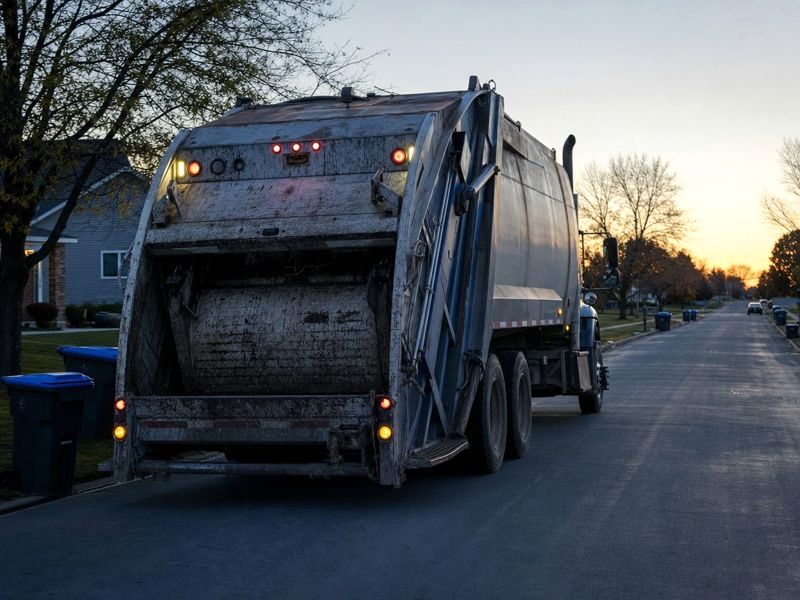
Garbage truck insurance
If you're paid to haul ordinary trash across state lines in a truck rated 10,001 pounds or more, federal rules require your garbage truck insurance to include at least $750,000 in liability coverage. That protects you if your truck hurts someone or damages their property. That amount is the federal floor. Your actual needs come down to your truck's weight, the kind of waste you carry, and whether you drive across state lines. - For-hire, interstate hauling of ordinary trash in trucks rated 10,001 pounds or more: at least $750,000 in liability coverage.
- Federal cargo minimum for ordinary trash: $0 - Listed hazardous waste in trucks rated 10,001 pounds or more: at least $1,000,000 in liability coverage; some loads require more.
Federal public liability minimum for interstate for-hire garbage trucks.
49 CFR 387.9Federal cargo insurance requirement for non-hazardous refuse haulers.
FMCSAFederal liability minimum when hauling hazardous or medical waste.
49 CFR 387.9Minimum annual auto premium on Amwins' fleet waste program.
amwins.comFederal minimums by load and weight
For ordinary garbage, these federal minimums apply to for-hire carriers hauling across state lines. If you haul hazardous waste, federal rules can apply even when you never leave your state. Ordinary trash inside one state follows that state's rules. A city fleet, or a business that transports only its own waste, falls outside that rule. When all your hauling stays inside a single state, that state sets the liability minimum. The filing is often a Form E from your insurer.
The gross vehicle weight rating for your truck tells you the most it can weigh when fully loaded, according to the manufacturer. Most of these minimums depend on whether that number reaches 10,001 pounds. The federal rule at 49 CFR 387.9 lays out most of these limits:
| What you haul | Truck's weight rating | Liability minimum |
|---|---|---|
| Non-hazardous property, fleet all trucks below 10,001 lbs | Less than 10,001 lbs | $300,000 minimum |
| Ordinary garbage and refuse loads | 10,001 lbs and up | $750,000 minimum |
| Listed hazardous waste and other hazardous materials | 10,001 lbs and up | $1,000,000 minimum |
| Explosives, poison gas, radioactive materials, or hazardous substances in bulk tanks | Check the federal rule for your load | $5,000,000 minimum |
That $300,000 figure traces back to the federal filing rule. Hazardous waste is handled under a different provision. Under 49 CFR 387.3(b), these rules can apply even to trips that stay inside one state when the load is hazardous waste.
Getting your insurance on file
Operating under your own authority across state lines means the federal government wants proof that you have coverage. The FMCSA, the federal agency in charge of registering trucking companies, receives that proof straight from your insurer instead of getting it from you. Here is what you need to do:
- Get a USDOT number, which every interstate truck rated 10,001 pounds or more needs.
- Apply for operating authority, also known as an MC number, and pay the one-time $300 fee.
- Your insurer files a form called BMC-91 or BMC-91X for you. It has to arrive within 20 days after your application is published, or the application is dismissed.
- Ask a process agent to submit Form BOC-3, listing every state where you work.
- Register for UCR every year; for 2027, the cost is $55 for 0 to 2 trucks.
Coverage types in a truck policy
- LiabilityPays for injuries and damage your truck causes to other people. The federal minimum is $300,000 to $5,000,000.
- Motor truck cargoPays for the load you haul if it is damaged or stolen. Most brokers ask for $100,000.
- Physical damageRepairs or replaces your own truck and trailer after a crash, fire or theft.
- Non-trucking liabilityCovers a driver working for a trucking company who uses the truck between loads, off the job.
- BobtailCovers a truck you drive for a trucking company when it has no trailer, such as a pickup heading home after dropping a load.
- Trailer interchangePays for damage to a trailer you pull for someone else under a written trailer-sharing agreement.
After your application is published, a 10-day protest period also runs. Your liability policy must carry the MCS-90 endorsement, the federal form FMCSA asks for.
Coverage for your truck and equipment
Progressive Commercial writes policies for the kinds of trucks most private waste companies operate: front-loading, rear-loading, and roll-off dumpster trucks. Minimum insurance only pays for damage you cause others, as Progressive points out, so many owners also cover their own truck and equipment.
- Collision: pays toward repairs to your own truck after a crash, overturn, or rollover, according to Progressive.
- Specialty equipment: Progressive says a garbage truck policy can cover mechanical arms, dumpsters, and compactors if they suffer accidental damage.
- Hired and non-owned auto liability: pays for claims involving vehicles you use but do not own. Prime Insurance Company names it as one of its garbage truck coverages.
Service records matter for reasons beyond safety. Progressive warns that coverage may be denied for a truck that has missed legally required maintenance.
Pollution coverage for waste haulers
Under 49 CFR 387.5, environmental restoration falls within public liability. A federal minimum policy therefore already has to answer cleanup claims following a spill. Some specialty programs offer more:
- Amwins offers auto liability coverage that includes pollution, and you can add an MCS-90 endorsement.
- XINSURANCE includes clean-up coverage for pollution stemming from the business.
Some insurers simply will not take trash routes. The Hartford says it does not write policies for garbage haulers and sends those businesses to Tivly. Prime, meanwhile, covers garbage trucks along with the companies and drivers that operate them in most states. It operates in the surplus-lines market, where insurers take on risks that standard carriers often decline. Prime says it writes for businesses that other insurers canceled or turned down before.
What it costs
There is no reliable garbage truck premium average in the sources here. Ask an agent for a quote based on your truck, routes, waste and equipment. One software vendor, Fleet Rabbit, puts auto liability alone at $4,000 to $15,000 a year for each truck, and it does not cite a source for that range. Amwins' waste hauler program has a $15,000 minimum auto premium, aimed at larger fleets rather than a single truck.
Broader trucking numbers add some perspective, though they do not reflect garbage truck pricing, and Insureon says hotshot truckers pay an average of $896 a month for commercial auto insurance. According to Progressive's national averages, monthly premiums for truck insurance ranged from $734 to $926, depending on the kind of trucking.
Other truck types
 Car hauler insuranceWedge and stinger trailers that carry cars
 Sprinter van insuranceSprinter cargo and passenger vans
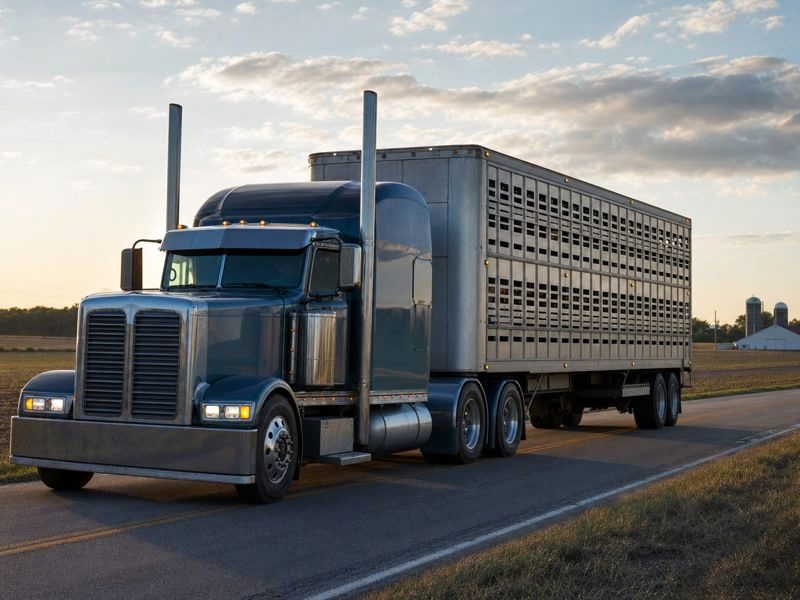 Livestock hauler insuranceCattle and other livestock trailers
Insurers that write small trucks and hotshots



One independent agent can quote several of these for the same truck. Logos belong to their owners; none of these companies runs this site.
Questions haulers ask
Which insurance does a junk hauling business need?
Three things decide it: the weight of the truck, the material you carry, and whether your routes cross state lines. If you're paid to haul across state lines, the federal minimum is $750,000 for a truck rated 10,001 pounds or more, or $300,000 if every truck in your fleet is rated under that. If you only work inside one state, your state sets the minimum. Hazardous waste in a truck rated 10,001 pounds or more raises the minimum to $1,000,000, and hazardous waste rules can apply even on trips within one state.
What changes if I lease my truck to a hauling company?
If you lease onto a carrier, its filing covers you while you're on its dispatch. You'd still carry your own non-trucking liability and physical damage coverage. Hotshot Insure doesn't sell insurance, but its phone line reaches an independent agent who writes trucks.
Sources
- Financial responsibility, minimum levels (49 CFR 387.9)
- Insurance filing requirements (FMCSA)
- Waste haulers (amwins.com)
- Security for the protection of the public: Minimum limits (49 CFR 387.303)
- Section 387.3 (49 CFR 387.3)
- Trucks we insure (Progressive Commercial)
- Garbage truck insurance (Progressive Commercial)
- Garbage truck insurance (primeis.com)
Related
Get your rig priced by an agent
Hotshot Insure does not sell insurance. An independent agent who places hotshot and small truck policies prices your rig by phone, or you can send your details.
A quote costs nothing, and you do not have to buy.