
Trucking insurance in South Carolina
On top of trucking insurance South Carolina also calls for an intrastate USDOT number.
Monthly cost, national figures
$665 to $1,165 a month for an established hotshot with a clean record (Trucking Insurance Services)
$1,000 to $1,800 in the first two years of a new MC number (Trucker Path Insurance)
What moves the priceBroker ask
$1,000,000 of auto liability and $100,000 of cargo cover, more than the law asks
Broker limits tableOwn MC number
The OP-1 application costs $300, you name a BOC-3 process agent, UCR starts at $55 a year, and your insurer files the BMC-91X within 20 days of FMCSA Register publication.
New authority checklistIt covers commercial vehicles rated 10,001 pounds or higher that never leave the state. Crossing state lines lifts the liability requirement to anywhere from $300,000 up to $5,000,000. At the state level, financial responsibility law starts with $25,000 in bodily injury coverage for 1 person and $50,000 for 2 or more people. It adds $25,000 for property damage. You get help matching your policy to your precise weight rating and cargo by talking with an agent who writes commercial truck coverage.
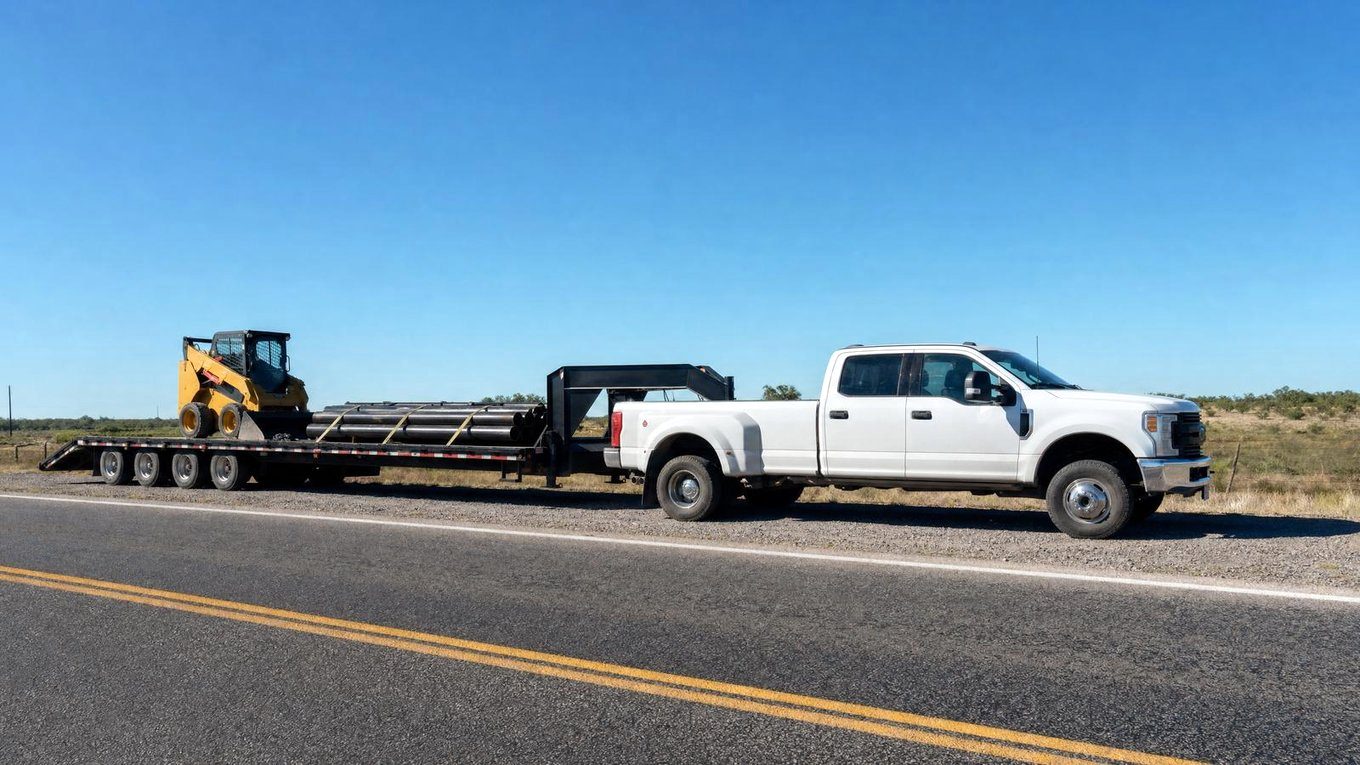
South Carolina intrastate trucking insurance requirements and USDOT rules
When every load you pick up and drop off stays inside South Carolina and you never cross a state border, that is intrastate trucking. Federal Motor Carrier Safety Regulations, which the state adopted, mean you need the South Carolina Intrastate USDOT number on commercial vehicles at or above 10,001 pounds. That weight trigger uses whichever figure is greater: the manufacturer's rating, or your truck's actual weight by itself or with a trailer.
The state number costs $0, and the registration covers your company plus every qualifying truck (though you cannot use it for out-of-state travel). A credit card is requested on the federal website only so the application can be verified. Filings done online process in about 1 hour; applications sent by mail or fax take about 2 weeks. An agent who insures commercial trucks helps you align liability coverage with the state USDOT registration.
South Carolina trucking insurance minimums and cargo coverage
Under South Carolina Financial Responsibility Act rules, basic vehicle liability begins with $25,000 in bodily injury coverage for 1 person. It rises to $50,000 when 2 or more people are hurt, and property damage starts at $25,000 per accident. Where other South Carolina laws make an owner carry higher insurance amounts, this 25/50/25 minimum doesn't apply to the vehicle.
Basic South Carolina liability policies won't pay for damage to property you haul. Customer freight needs a separate cargo policy, or it has no protection. An insurance agent who specializes in trucking can put together the cargo and liability limits your contracts demand.
Who needs South Carolina commercial truck insurance for interstate loads?
Once you haul freight across a state line, federal liability rules take over from state minimums for your truck. So your operating authority can go active, your insurer files Form BMC-91X with federal regulators as the official proof of liability insurance (Form BMC-91 or a BMC-82 bond can also be filed by insurers).
For general freight, trucks weighing 10,001 pounds or more call for $750,000 or higher on file. Small-fleet federal rules put a $300,000 floor on fleets that run nothing but vehicles under 10,001 pounds. Required FMCSA insurance filings climb to $1,000,000 or $5,000,000 for hazardous loads, based on the material.
Beyond what the law demands, most freight brokers still want higher limits: C.H. Robinson requires auto liability of $1,000,000 and cargo liability of $100,000. Your filings stay in step with federal rules and broker packets when you work with a trucking insurance agent.
| Operation and cargo type | Vehicle weight | Minimum liability limit |
|---|---|---|
| South Carolina basic financial responsibility | Basic state minimum | $25,000 / $50,000 / $25,000 |
| Interstate for-hire general property | Under 10,001 pounds (entire fleet) | $300,000 |
| Interstate for-hire non-hazardous property | 10,001 pounds or more | $750,000 |
| Interstate for-hire oil, hazardous waste, or placarded loads | Any weight | $1,000,000 |
| Bulk hazmat tanks, poison gas, explosives, or radioactive loads, for-hire or private | Any weight | $5,000,000 |
SCDMV plates, tax forms, and renewals
A tag for interstate trucks, called an IRP plate, comes from the International Registration Plan and splits your registration fees among the states where you drive. When a truck's gross vehicle weight stays at 26,000 pounds or less on trips outside South Carolina, the South Carolina Department of Motor Vehicles may let you take a South Carolina base plate in place of an IRP plate.
Branch offices cannot process IRP registrations, so you have to finish them online through the South Carolina Trucking Portal; other motor carrier transactions are handled at 8 SCDMV branches. SCDMV Form MC-26 is required before you can get into the system, and an online transaction with no activity for 5 working days gets deleted. Your declared weights and coverage dates stay the same across your state tax and registration forms when a commercial truck insurance agent sorts out your policy first.
- In South Carolina, both IRP registrants and intrastate carriers must present an IRS Form 2290 Schedule 1 return covering the Heavy Vehicle Use Tax.
- When a vehicle's declared gross weight is 55,000 pounds or more, its owner must hand the SCDMV an IRS Schedule 1 receipt showing the tax was paid.
- Fleets registering 25 or more vehicles must e-file with the IRS, because the SCDMV won't take their paper Heavy Vehicle Use Tax returns.
- An online IRP fleet renewal requires emailing Form 2290 and Form IRP-9 once the online transaction is done.
Questions people ask
How do I put a South Carolina intrastate USDOT number on my truck?
Any vehicle using a South Carolina Intrastate USDOT number has to show the USDOT number first, with the letters SC following. It must stay readable by daylight from 50 feet on a parked vehicle. A copy of your intrastate USDOT notification should stay in every vehicle until the number appears on the outside. When your pickup stays under 10,001 pounds on its own and only passes 10,001 pounds combined while towing a trailer, removable magnetic signs are allowed.
Is a fleet allowed to self-insure in South Carolina, and can it cancel a filed policy right away?
In South Carolina, a person or company may qualify as a self-insurer when its name is on more than 25 registered vehicles and net worth reaches $20,000,000 or more. When a carrier uses a standard insurance company, its certified liability policy cannot be cancelled until a notice of cancellation has been on file with the Department of Motor Vehicles for at least 10 days.
Where do I buy South Carolina trip permits, and where can I get help with carrier applications?
Since May 6, 2024, individual customers can buy IFTA and IRP trip permits directly from the SCDMV once their Motor Carrier Services login is approved, which takes up to 48 hours. You can call the SCDMV Motor Carrier Information Center at (803) 896-3870 with trip permit questions, or call the South Carolina State Transport Police Division at (803) 896-5500 to apply for an intrastate USDOT number.
Sources
- South Carolina state library publication (dc.statelibrary.sc.gov)
- Code of Laws (scstatehouse.gov)
- Financial responsibility, minimum levels (49 CFR 387.9)
- Commercial Vehicles (dmv.sc.gov)
- Security for the protection of the public: Minimum limits (49 CFR 387.303)
- Insurance filing requirements (FMCSA)
- Carrier Resources: FAQs (C.H. Robinson)
- Trucking Portal (dmv.sc.gov)
Related
Insuring a truck in South Carolina
A trucking agent who places policies in South Carolina can quote it by phone, or you can send your details.