
Reefer truck insurance
Reefer truck insurance can help pay for spoiled goods if your cooling equipment breaks down, provided your policy includes refrigeration breakdown. No law says you must carry breakdown coverage, though plenty of big clients make shippers sign contracts promising enough cargo insurance to protect a load.
- Breakdown coverage: No legal requirement
- Liability insurance: Legally required, with each state setting its own minimums
- Federal minimum: For-hire carriers hauling non-hazardous goods between states need $750,000 when the vehicle weighs 10,001 lbs or more
- Reefer coverage: An add-on to a commercial truck policy rather than a standalone product
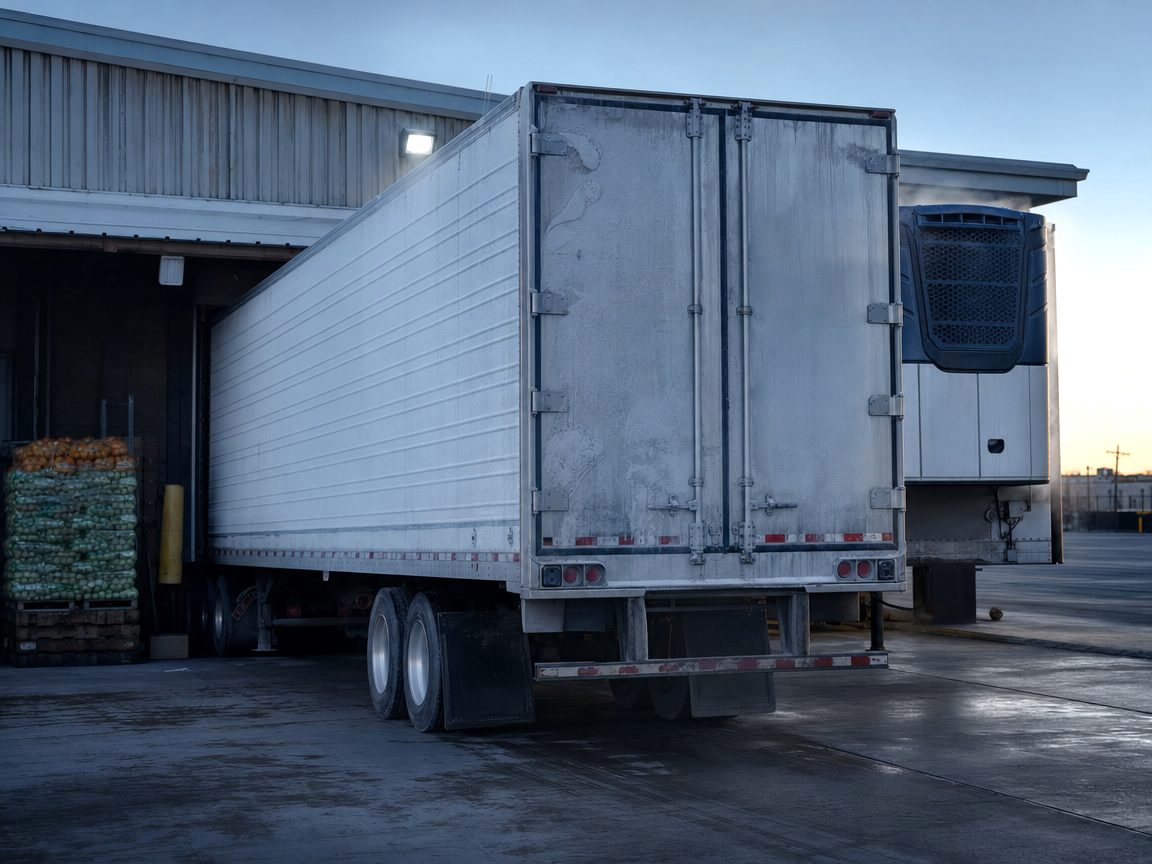
What does refrigerated truck insurance pay for?
It can help pay for goods ruined when your cooling unit fails. Standard cargo insurance handles everyday risks such as fire or theft, but a refrigerated truck often needs more than that.
Check that your policy specifically covers refrigeration breakdown. If your policy doesn't say so, a spoiled load may not be covered, so it's worth checking the wording before you haul.
A few policies do more. Progressive's Cargo Plus comes with every eligible policy that has motor truck cargo coverage. It covers you even when you're at fault for the loss, and it can still pay for spoiled goods if you forget to check how cold your trailer stays.
How to get reefer insurance
You can't buy reefer coverage on its own. It comes as part of commercial auto coverage combined with motor truck cargo insurance that specifically covers refrigeration breakdown. Adding it helps protect goods damaged or spoiled by temperature changes.
Already have a truck policy? Your insurer can attach a reefer endorsement to the coverage you already carry. Progressive says a quote may take only eight minutes. Drivers who buy business and commercial auto policies from Progressive Commercial can earn multi-policy discounts, and good risk management habits can bring your premiums down.
Food safety rules
If you haul perishable food, the FDA requires equipment that reliably holds the right temperature, and you may need records showing your load stayed food-safe the whole trip.
Liability minimums for reefer trucks
The law requires liability insurance, and minimums differ from state to state. Anyone driving across state lines for work must meet FMCSA rules. If you get paid to haul other people's freight across state lines, you're a "for-hire" carrier, and these are the minimums that apply to you.
| Carrier type | Freight hauled | Minimum liability |
|---|---|---|
| For-hire property carrier with a fleet of only vehicles rated below 10,001 lbs | Property | $300,000 |
| For-hire, vehicle rated 10,001 lbs or more, crossing state lines | Non-hazardous goods | $750,000 |
| For-hire, vehicle rated 10,001 lbs or more | Certain dangerous goods, such as shipments requiring placards, oil, or hazardous waste | $1,000,000 |
| For-hire or private | Explosive materials, poison gas, radioactive material, or hazardous substances carried in bulk tanks | $5,000,000 |
References: 49 CFR 387.303, 49 CFR 387.9, and FMCSA.
Brokers frequently want more than the federal floor. C.H. Robinson, TQL, and Uber Freight all want carriers to carry $1,000,000 in auto liability plus $100,000 in cargo coverage.
Insurance for your truck and injuries
Liability and cargo coverage look after other people and their freight, not your own equipment. For your truck and any injuries, these coverages help:
- Collision: Covers repairs to your reefer after a crash, even one involving only your truck.
- Comprehensive: Covers your truck for covered events that aren't crashes, like fire or theft.
- Medical payments: Helps pay medical costs for you and your passengers after an accident.
Downtime, towing, and trailers you borrow
With rental reimbursement and downtime coverage, you can get help paying for a rental while your reefer truck sits in the shop. When no suitable rental can be found, it can also help cover lost income.
Roadside assistance for heavy trucks covers towing, fuel delivery, and flat-tire changes, and towing is covered for as much as $5,000.
When you're hauling a trailer owned by someone else, trailer interchange insurance steps in. It can cover damage to that trailer while you're transporting it under an interchange agreement.
Common questions
What does reefer insurance cost?
There's no single number for reefer coverage by itself. Looking at commercial truck insurance as a whole, Progressive Commercial reports a national average monthly price between $734 for specialty truckers and $926 for transport truckers. And according to Insureon, hotshot truckers spend about $896 a month on commercial auto insurance.
Does the federal government require cargo insurance?
No. Freight carriers face no federal cargo insurance requirement; only household goods movers do.
How will my insurer prove liability coverage?
Proof gets filed with FMCSA by your insurer on Form BMC-91 or BMC-91X. Once FMCSA publishes your authority application, the insurer must file within 20 days or the application gets dismissed.
Sources
Related
Get your rig priced by an agent
Hotshot Insure does not sell insurance. An independent agent who places hotshot and small truck policies prices your rig by phone, or you can send your details.