
Trucking insurance in Kansas
Most freight trucks rated 10,001 pounds or more must carry at least $750,000 in liability coverage to have trucking insurance Kansas regulators accept.
Monthly cost, national figures
$665 to $1,165 a month for an established hotshot with a clean record (Trucking Insurance Services)
$1,000 to $1,800 in the first two years of a new MC number (Trucker Path Insurance)
What moves the priceBroker ask
$1,000,000 of auto liability and $100,000 of cargo cover, more than the law asks
Broker limits tableOwn MC number
The OP-1 application costs $300, you name a BOC-3 process agent, UCR starts at $55 a year, and your insurer files the BMC-91X within 20 days of FMCSA Register publication.
New authority checklistKansas holds commercial motor vehicles to federal safety rules (even when you never drive out of state), so your application keeps moving when limits and filings are right.
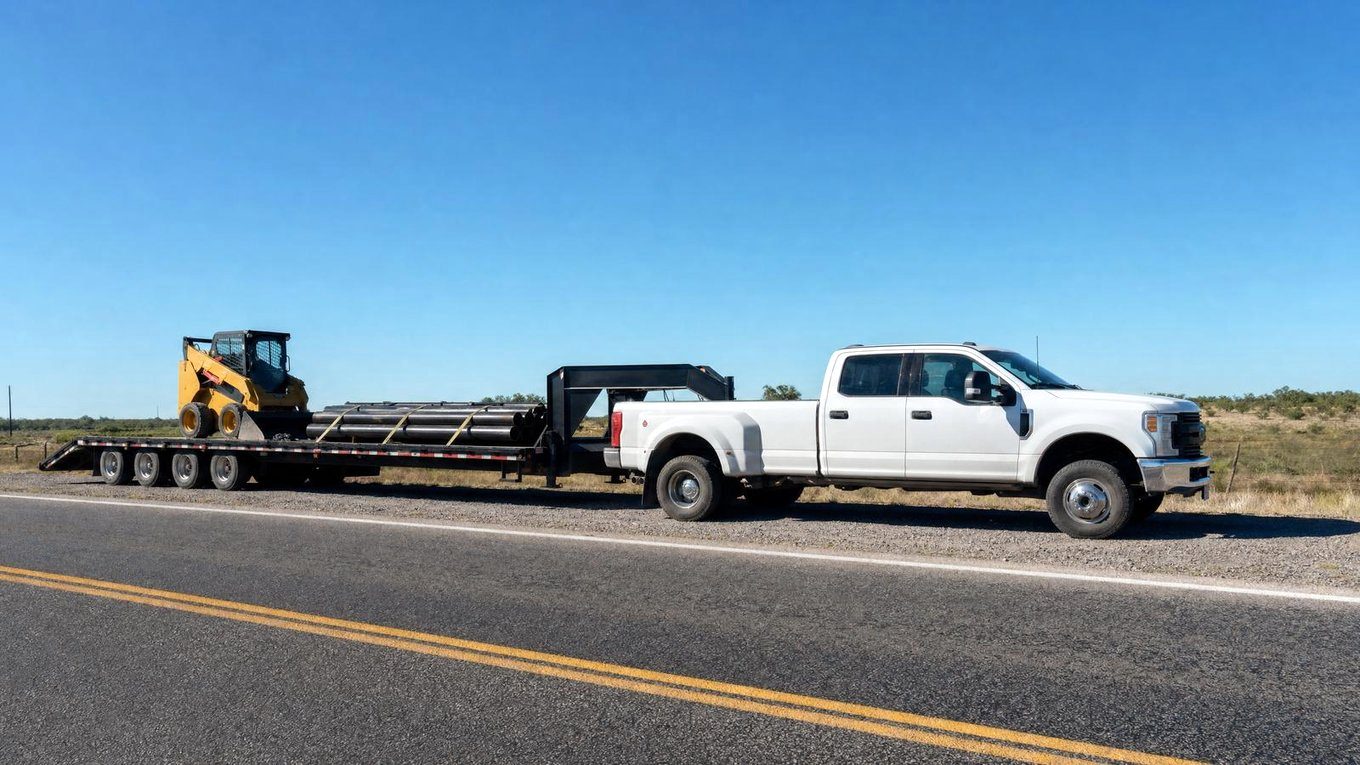
Kansas intrastate trucking insurance requirements
Within the state, commercial trucking is regulated by the Kansas Corporation Commission, which adopts safety regulations and administers economic rules. Since July 26, 2019, Kansas Administrative Regulations 82-4-1 et seq. have placed every commercial motor vehicle, and its driver, in Kansas under the Federal Motor Carrier Safety Regulations, along with federal liability insurance limits.
Hauling loads from pickup to delivery without ever crossing the Kansas state line is what intrastate trucking means. For-hire carriers haul someone else's freight for pay, and private carriers move nothing but their own company's freight. The manufacturer sets a maximum loaded weight that your truck or combination can safely weigh; that figure is your gross vehicle weight rating.
Under Kansas safety rules, a commercial motor vehicle starts at a gross weight rating of 10,001 pounds. A private carrier in intrastate commerce qualifies at 26,001 pounds or above. Talking with an insurance agent who writes trucks daily makes it easier to match the exact coverage Kansas requires to your weight rating.
Minimum limits for Kansas commercial truck insurance
The legal minimum you must carry depends on your vehicle's weight rating and the type of freight you carry. Lighter work vehicles that fall outside commercial safety rules still need auto liability at the Kansas minimum of 25/50/25. They also need Personal Injury Protection of at least $4,500 per person for medical expenses, plus $25,000 per person in bodily injury coverage for uninsured or underinsured motorists.
Freight brokers such as C.H. Robinson want carriers to carry $1,000,000 of auto liability and $100,000 of cargo liability, even though federal rules set $750,000 as the legal minimum for most general freight trucks. A trucking insurance agent is able to compare both limits for you, so you don't buy a policy brokers turn down.
| Carrier and cargo type | Weight rating | Minimum liability coverage |
|---|---|---|
| Base Kansas auto liability | Under commercial thresholds | $25,000 for each person, $50,000 per accident covering 2 or more people, plus $25,000 for property damage |
| For-hire property carrier | Fleet only under 10,001 pounds | $300,000 |
| For-hire non-hazardous property | 10,001 pounds or more | $750,000 |
| Certain hazardous materials hauled for-hire, including placarded loads, oil, and hazardous waste | All weights | $1,000,000 |
| Private or for-hire carriers hauling bulk hazardous substances, poison gas, explosives, or radioactive materials | All weights | $5,000,000 |
How do you file Kansas trucking insurance for state authority?
Operating authority means the government has given you permission to haul freight for pay. The Kansas Corporation Commission handles state filings through K-TRAN, its online portal. You handle renewals, authorities, waivers, and Unified Carrier Registration fees in K-TRAN, and an experienced truck insurance agent makes sure the insurer files proof of coverage so nothing stalls your application.
- If you run an intrastate for-hire operation at 10,001 pounds or more, you need a USDOT number plus Kansas Corporation Commission for-hire authority. The cost is a $250 application fee and $10 per vehicle per year (unless your fees go through Unified Carrier Registration).
- Private carriers running intrastate need a USDOT number from 26,000 pounds up, and a Kansas Intrastate Private Carrier Permit from 26,001 pounds up. The permit costs a $100 application fee plus a yearly per-vehicle fee (except when you pay through Unified Carrier Registration).
- Commercial driver's licenses and commercial vehicle registration are handled by the Kansas Department of Revenue. The Kansas Department of Transportation takes care of oversize or overweight permitting, escort vehicle registration, and routing.
Federal insurance filings when you cross state lines
If you carry property across state lines for pay, your insurer must file Form BMC-91, Form BMC-91X, or a BMC-82 bond with the Federal Motor Carrier Safety Administration before your interstate authority takes effect. Uploading a policy declaration page yourself is not allowed.
Hauling non-hazardous property interstate as a for-hire carrier means at least $750,000 in liability once you reach 10,001 pounds. Fleets with nothing but vehicles under 10,001 pounds must carry at least $300,000. Your federal BMC-91X and state paperwork stay lined up from the start when you work with an agent who knows trucking.
Questions people ask
Are farm trucks in Kansas required to have a USDOT number and federal insurance filings?
If a motor vehicle is farm-registered and operated in Kansas, USDOT and Federal Motor Carrier Safety Administration requirements don't apply to it. A commercial policy can be set up with help from a trucking insurance agent if you begin moving paid freight for others beyond farm rules.
If I get Kansas commercial plates, do I need a USDOT number?
Commercial registration and a USDOT number are separate requirements under Kansas rules. Kansas commercial registration under KSA 8-143m is a must for intrastate carriers that lack apportioned registration, starting at 10,001 pounds of gross weight or gross combination weight. That applies even when a private carrier falls below the USDOT threshold of 26,000 pounds.
How much are registration and fuel taxes for heavy trucks in Kansas?
A tractor semi-trailer combination at 80,000 pounds pays $1,870 as its Kansas base registration fee, plus the added Kansas Commercial Vehicle Fee. Kansas charges a motor fuel tax at the pump: gasoline costs $0.24 per gallon in tax, and diesel costs $0.26 per gallon.
Sources
- Financial responsibility, minimum levels (49 CFR 387.9)
- Kansas House transportation testimony, Jan 2023 (kslegislature.gov)
- 40-3107 (ksrevisor.gov)
- Insurance filing requirements (FMCSA)
- KCC motor carrier rules (kcc.ks.gov)
- Kansas auto insurance shopper’s guide (insurance.ks.gov)
- Carrier Resources: FAQs (C.H. Robinson)
- KDOT commercial vehicle information (ksdot.gov)
Related
Insuring a truck in Kansas
A trucking agent who places policies in Kansas can quote it by phone, or you can send your details.