
Trucking insurance in Ohio
For-hire carriers arranging trucking insurance Ohio must carry at least $750,000 in public liability on trucks rated 10,001 pounds or more.
Monthly cost, national figures
$665 to $1,165 a month for an established hotshot with a clean record (Trucking Insurance Services)
$1,000 to $1,800 in the first two years of a new MC number (Trucker Path Insurance)
What moves the priceBroker ask
$1,000,000 of auto liability and $100,000 of cargo cover, more than the law asks
Broker limits tableOwn MC number
The OP-1 application costs $300, you name a BOC-3 process agent, UCR starts at $55 a year, and your insurer files the BMC-91X within 20 days of FMCSA Register publication.
New authority checklistWhen your fleet runs only vehicles under 10,001 pounds, the state minimum falls to $300,000. An electronic filing must also go to the state from your insurer before any hauling starts.
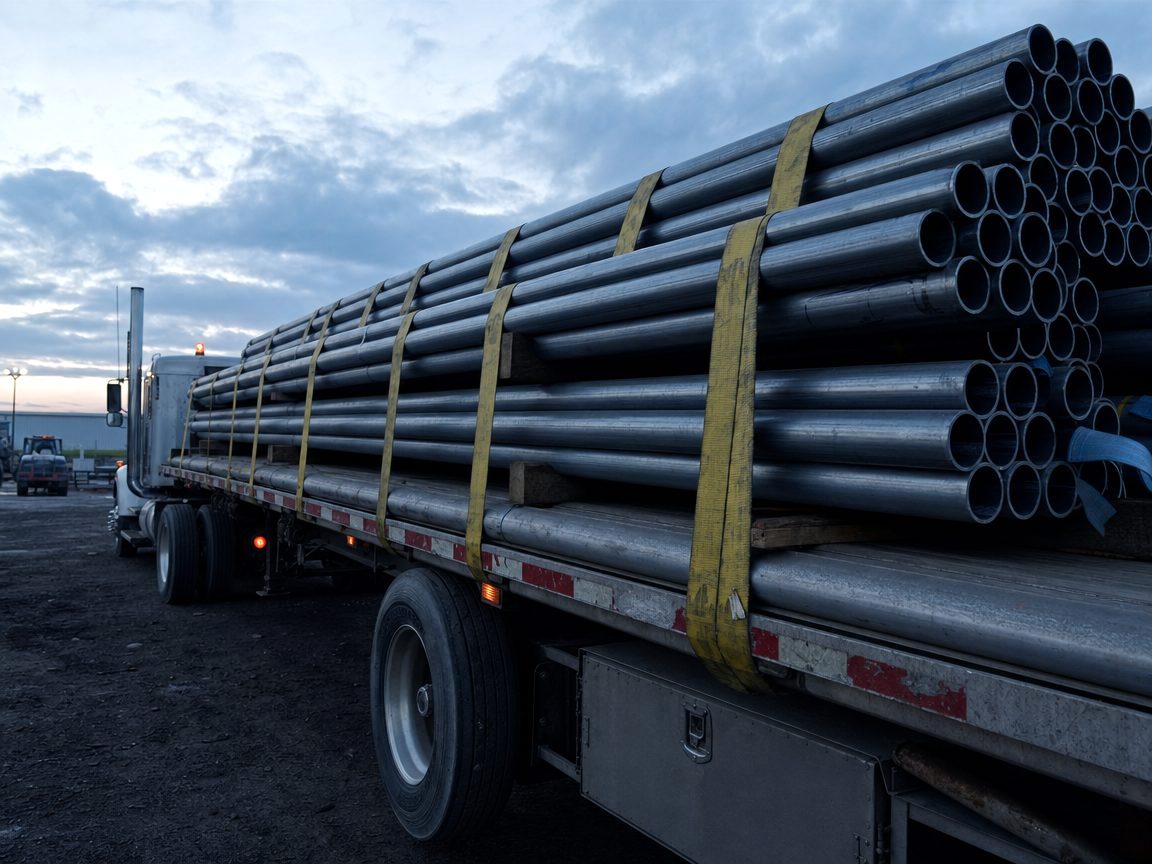
Ohio intrastate trucking insurance requirements
A load is intrastate when it gets picked up and dropped off without ever leaving the state. For-hire work means you are paid to move freight owned by someone else. The Ohio Administrative Code ties your minimum liability limit to your gross weight rating and the freight you carry. It means the most your truck and trailer can weigh as a loaded unit, which the manufacturer puts on a label inside the door frame.
Your state application can stall if the weight bracket on your policy is wrong. Before you put money down, an agent who writes truck policies every day can line up your door jamb ratings with the right state tier.
| Carrier and cargo type | Vehicle weight rating | Minimum Ohio public liability |
|---|---|---|
| For-hire general freight | Under 10,001 pounds | $300,000 |
| For-hire general freight | 10,001 pounds or more | $750,000 |
| Oil moved for-hire or privately (any quantity), and lower-tier hazardous materials | Any weight | $1,000,000 |
| Explosives in Class 1.1, 1.2, or 1.3 (any quantity), hauled for-hire or privately, or hazardous tanks holding more than 3,500 water gallons | Any weight | $5,000,000 |
Filing your Ohio trucking insurance and authority
For-hire carriers moving loads point-to-point within the state must hold the Certificate of Public Convenience and Necessity before operating. The Public Utilities Commission of Ohio issues it. Step 1: get your intrastate USDOT number from the federal regulators. Any vehicle or combination with a rating of 10,001 pounds or more needs one. Next, file your state application online, because the commission does not accept paperwork sent by mail or email.
Until your insurer files Form E electronically with the state, your authority stays inactive. As an electronic certificate, Form E proves your liability policy meets state law. Each year, you must renew the state certificate online from May 1 through June 30. This applies even if you hold apportioned plate or fuel tax accounts for intrastate work. Your Form E needs to transmit cleanly for your authority to activate on time, and a trucking insurance agent can make sure it does.
Who needs Ohio commercial truck insurance and safety numbers?
Which state safety rules apply depends on whether you haul for customers or carry your own company supplies. The motor carrier safety rules in Ohio make any for-hire vehicle or combination rated 10,001 pounds or more a commercial motor vehicle. Private intrastate carriers reach that mark only at 26,001 pounds or more. Weight makes no difference once a vehicle carries placarded hazardous materials: federal officers, the Ohio State Highway Patrol, and the state commission all have authority.
Lighter private trucks not covered by those rules still must meet Ohio auto minimums. That means $25,000 when one person is injured, $50,000 per accident, and $25,000 to cover damaged property. A regulated intrastate truck must carry the carrier's name plus a PUCO or USDOT number on each side of the vehicle. Parked in daylight, the markings must be readable from 50 feet. A talk with a truck insurance agent can show whether commercial filings or basic coverage fit your operation.
Hauling across state lines and meeting broker minimums
Cross a state line with a load, and you fall under the federal rules for insurance filings. Ohio's figures match the federal liability minimums exactly. A fleet running nothing but vehicles under 10,001 pounds needs $300,000, while non-hazardous freight in vehicles rated 10,001 pounds or more needs $750,000. Placarded hazardous waste or oil needs $1,000,000, and bulk hazardous tanks, explosives, poison gas, or radioactive materials need $5,000,000. Your insurance company submits Form BMC-91, BMC-91X, or a BMC-82 bond to federal regulators. You cover an annual Unified Carrier Registration fee in place of a yearly Ohio certificate renewal (except when household goods are hauled).
Even so, most freight brokers ask for more than the law requires. C.H. Robinson, for instance, sets the bar at $1,000,000 for auto liability and $100,000 for cargo coverage. You can ask an experienced truck insurance agent to compare the cost of the $750,000 legal minimum with the $1,000,000 broker standard.
Questions people ask
Do you need more insurance in Ohio to haul a tractor on a trailer?
Yes. Moving tractors on a trailer is treated as hazardous materials hauling under Public Utilities Commission of Ohio rules. That rule means public liability coverage of at least $1,000,000 is required before hauling tractors on a trailer here in the state.
How much cargo coverage must Ohio household goods movers carry?
Under the Ohio Administrative Code, intrastate household goods cargo liability sits at $5,000 per vehicle, with $10,000 for losses at any 1 place or time. The registration FAQ from the state commission asks for $20,000 for each straight truck or combination. Both Form E (liability) and Form H (cargo coverage) must be filed electronically with the state commission by your insurer.
Rather than buying an Ohio policy, can I rely on a bond or self-insurance?
Ohio accepts a $30,000 bond issued by an authorized surety or insurer to satisfy basic state financial responsibility. Owners whose registered motor vehicles number more than 25 can receive a self-insurance certificate from the Bureau of Motor Vehicles. Regulated motor carriers who prefer self-insurance must send their filing straight to the Federal Motor Carrier Safety Administration.
Sources
- Ohio Adm. Code 4901:2-13-03 (codes.ohio.gov)
- Intrastate motor carriers and registration information (puco.ohio.gov)
- PUCO motor carrier safety guidebook (2019) (puco.ohio.gov)
- Ohio minimum auto coverage (2021) (insurance.ohio.gov)
- Insurance filing requirements (FMCSA)
- Carrier Resources: FAQs (C.H. Robinson)
Related
Insuring a truck in Ohio
A trucking agent who places policies in Ohio can quote it by phone, or you can send your details.