
Trucking insurance in Vermont
The base level of trucking insurance Vermont requires is the state auto minimum: bodily injury cover of $25,000 per injured person and $50,000 per accident, plus $10,000 for property damage.
Monthly cost, national figures
$665 to $1,165 a month for an established hotshot with a clean record (Trucking Insurance Services)
$1,000 to $1,800 in the first two years of a new MC number (Trucker Path Insurance)
What moves the priceBroker ask
$1,000,000 of auto liability and $100,000 of cargo cover, more than the law asks
Broker limits tableOwn MC number
The OP-1 application costs $300, you name a BOC-3 process agent, UCR starts at $55 a year, and your insurer files the BMC-91X within 20 days of FMCSA Register publication.
New authority checklistYour required liability limit rises to between $300,000 and $5,000,000 once you cross a state line for hire. Proof of coverage must also be sent by your insurer before your authority can go active.
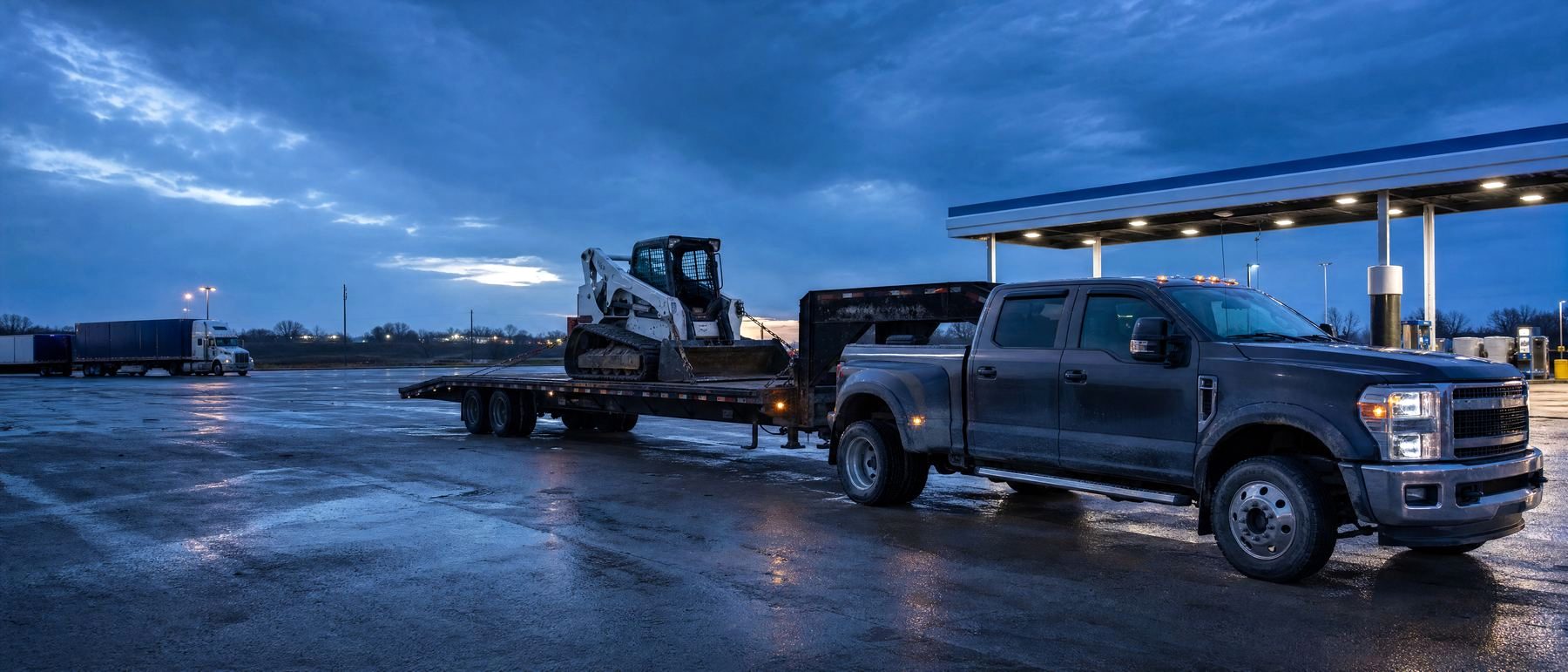
Vermont intrastate trucking insurance requirements
If a load begins and finishes within Vermont and never crosses a state line, that is intrastate commerce. Vermont insurance rules make you carry at least $25,000 for each person, $50,000 for each crash, and $10,000 for damage to property. Only intrastate trucks or combinations that weigh 26,001 pounds or more fall under state safety regulations.
Meeting the state minimums keeps your plates legal, but shippers expect more than that. Freight brokers such as C.H. Robinson want carriers to show $1,000,000 of auto liability plus $100,000 for cargo. A conversation with an agent who handles commercial truck insurance helps you pick limits that work for Vermont law and for your brokers.
Vermont commercial truck insurance for interstate freight
Federal rules apply the moment you cross a state line (and the insurance minimums go up). According to the Vermont DMV USDOT guide, you generally need a USDOT number when vehicles over 10,000 pounds are used in interstate commerce. Your cargo and gross vehicle weight rating set the coverage you must have. That rating is the maximum loaded weight the manufacturer puts on your door label.
Your insurer uses the federal Form BMC-91 filing, or BMC-91X, to show active liability coverage under FMCSA filing standards; a BMC-82 bond can work too. To get your authority started, a trucking insurance agent can make certain your company submits the right form.
| Operation and cargo type | Weight rating | Minimum liability |
|---|---|---|
| Vermont state auto minimum | Any weight | $25,000 for each person; $50,000 for each accident; $10,000 for property damage |
| Interstate for-hire fleet with only light vehicles | Under 10,001 lbs | $300,000 |
| Interstate for-hire non-hazardous freight | 10,001 lbs or more | $750,000 |
| Interstate for-hire oil, hazardous waste, or placarded loads | Any weight | $1,000,000 |
| Bulk hazardous tanks, radioactive items, poison gas, or explosives, whether for-hire or private | Any weight | $5,000,000 |
 Typical broker requirement, such as C.H. Robinson | Any weight | $1,000,000 auto and $100,000 cargo |
How do safety rules affect Vermont trucking insurance?
State inspection rules are what underwriters measure your daily operations against. Within Vermont, the Motor Carrier Safety Regulations govern intrastate vehicles of 26,001 pounds or more, plus interstate vehicles at 10,001 pounds and up.
Your policy can match how you actually haul when you review equipment and operating radius alongside a commercial truck insurance agent.
- In intrastate or interstate commerce, drivers of carrier vehicles weighing 10,001 pounds or more (gross or combined) must keep duty status logs.
- Short-haul drivers may not need logs if they remain no farther than 150 air miles from their normal work reporting location.
- To pass Vermont state inspection, any truck rated 10,001 pounds or higher must carry emergency triangles, flares, or flags.
Vermont driver medical cards and inspections
Your drivers' age and medical qualifications also get checked by insurers. State officers check commercial trucks and drivers against both state and federal safety regulations under Vermont's federal safety enforcement. Covered drivers need a physical every 2 years, and they must carry a medical examiner certificate.
You must be 21 or older to drive interstate. For a hazardous materials endorsement, federal safety rules still must be met, apart from the intrastate-travel age limit. For compliance questions like driver qualification files, call the Vermont DMV Commercial Vehicle Enforcement Unit at 802.828.2078. How driver age affects your quote is something a truck insurance agent can explain.
Questions people ask
When do I need to tell the Vermont DMV about a commercial truck crash?
After a commercial motor vehicle crash, send written notice to the Vermont DMV within 72 hours when anyone is hurt or total property damage hits $3,000 or more. For 3 years, crash records also have to remain at your principal place of business.
What's holding up my new Vermont IRP or IFTA account?
Vermont must confirm your residency or your established place of business before a new IRP or IFTA account can be opened. These details get checked by the state before credentials are issued, so expect processing delays.
How long must an SR-22 stay on file with the Vermont DMV, and who is allowed to file one?
You prove you carry required liability coverage with an SR-22, a certificate that must stay filed with the Vermont DMV for a minimum of 3 years. Only an insurance company may submit an SR-22 certificate to the Vermont DMV; an insurance agent cannot do it.
Sources
- Vermont motor carrier safety regulations (VN-166) (dmv.vermont.gov)
- Financial responsibility, minimum levels (49 CFR 387.9)
- Insurance filing requirements (FMCSA)
- Auto Insurance (dfr.vermont.gov)
- Insurance (dmv.vermont.gov)
- Carrier Resources: FAQs (C.H. Robinson)
- Vermont DMV: when a USDOT number is needed (dmv.vermont.gov)
- FMCSA (dmv.vermont.gov)
Related
Insuring a truck in Vermont
A trucking agent who places policies in Vermont can quote it by phone, or you can send your details.