
Trucking insurance in Washington
Truck weight decides whether most carriers hauling freight for hire need $300,000 or $750,000 as their minimum liability coverage under the trucking insurance Washington enforces.
Monthly cost, national figures
$665 to $1,165 a month for an established hotshot with a clean record (Trucking Insurance Services)
$1,000 to $1,800 in the first two years of a new MC number (Trucker Path Insurance)
What moves the priceBroker ask
$1,000,000 of auto liability and $100,000 of cargo cover, more than the law asks
Broker limits tableOwn MC number
The OP-1 application costs $300, you name a BOC-3 process agent, UCR starts at $55 a year, and your insurer files the BMC-91X within 20 days of FMCSA Register publication.
New authority checklistYour insurer must send proof of coverage straight to the Washington Utilities and Transportation Commission before any paid hauling inside the state. Getting the right policy limits and state filings in place early keeps your permit application moving.
Washington intrastate trucking insurance requirements
Intrastate commerce means hauling loads that begin and finish within the state and never cross a border. You must keep public liability insurance and property damage coverage on file when you apply to the Washington Utilities and Transportation Commission for a permit, certificate, or registration. Under commission rules, your coverage is a combined single limit. That is 1 dollar amount in total your policy pays, covering all injuries and property damage from 1 crash.
Meeting state minimums activates your permit, but many freight brokers want higher limits before they'll let you haul their freight. C.H. Robinson requires $1,000,000 of auto liability plus $100,000 for cargo, as one example. Broker contracts and state rules are easier to meet when an agent who writes truck policies reviews your haul plans.
| Carrier and cargo type | Vehicle weight | Minimum coverage |
|---|---|---|
| General commodities | Under 10,000 lbs | $300,000 combined single limit |
| General commodities | Over 10,000 lbs | $750,000 combined single limit |
| Other hazardous waste or materials | Any weight | $1,000,000 combined single limit |
| Explosives, poison or compressed gas, radioactive, bulk hazardous substances | Any weight | $5,000,000 combined single limit |
| Household goods cargo insurance | Under 10,000 lbs | $10,000 cargo limit |
| Household goods cargo insurance | Over 10,000 lbs | $20,000 cargo limit |
Filing your Washington trucking insurance with the state
Your permit stays inactive after you buy a policy until official proof is sent to the state by your insurer. Your insurer files Form E, formally titled Uniform Motor Carrier Bodily Injury and Property Damage Liability Certificate of Insurance, with the UTC. Until Form E takes over, a temporary insurance certificate or binder can cover you for up to 60 days.
The Department of Licensing has a mandatory auto insurance law, but trucks registered with the commission as common or contract carriers are exempt from it. Other commercial vehicles need at least $25,000 for injuries or death involving 1 person, $50,000 when 2 or more people are involved, and $10,000 covering property damage in 1 accident. The fine for driving without this coverage is $550 or more. (A $60,000 liability bond works instead, and owners of 26 or more vehicles may self-insure.) An agent who submits Form E often prevents paperwork mistakes ahead of your 60-day temporary coverage expiring.
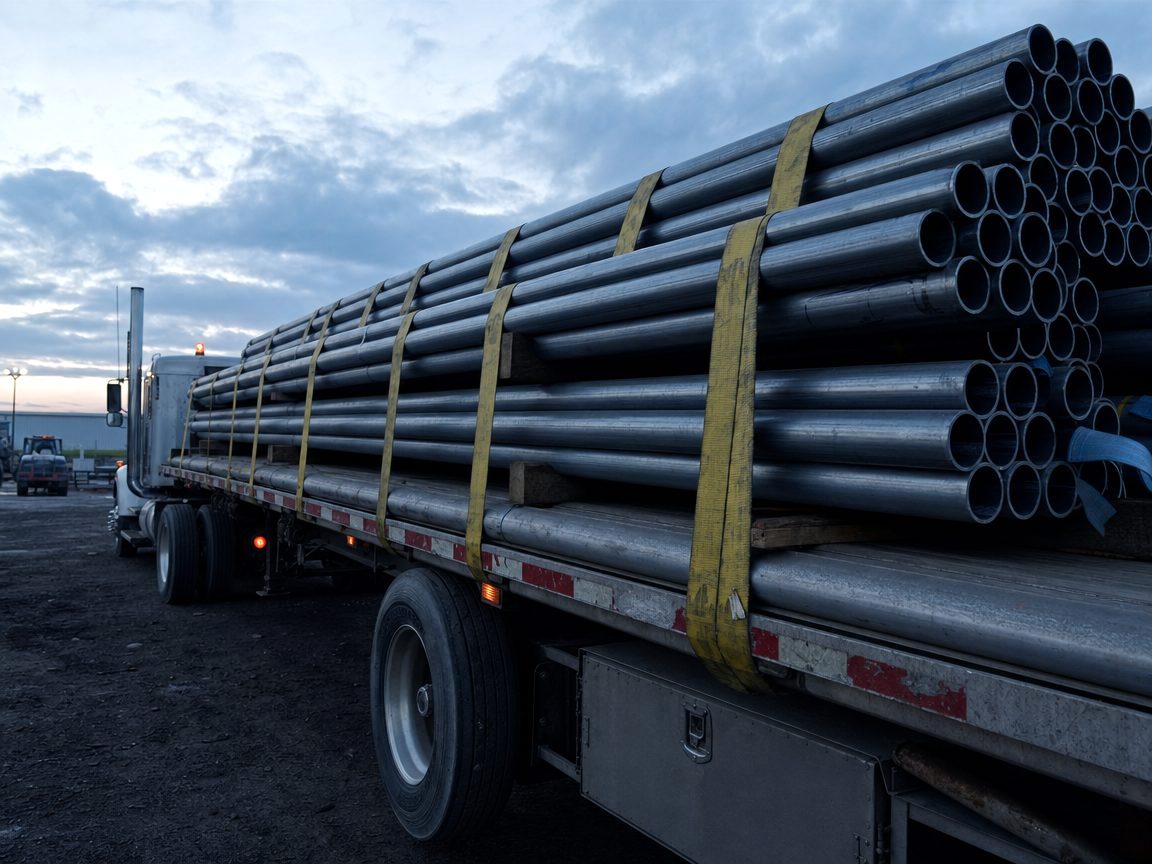
Do you need a USDOT number and Washington commercial truck insurance?
Many local carriers must display a USDOT number under state law, even if the federal website indicates none is required. The rule depends on gross vehicle weight rating, the maximum safe weight the manufacturer lists for a vehicle and its cargo. The Department of Licensing says these operations call for a USDOT number shown on 2 sides of your truck, readable from 50 feet in daylight while stationary:
The Washington State Patrol enforces federal safety and financial responsibility rules as of April 25, 2026, for all carriers (you can call the patrol with USDOT questions at (360) 596-3812). Even so, federal physical and testing rules for drivers do not cover intrastate trucks rated 10,001 through 26,000 lbs when no placarded hazardous materials are hauled. Drivers age 18 to 20 can be used. An agent familiar with state truck rules can fit your policy to your precise weight rating and the ages of your drivers.
- Any commercial motor vehicle whose rating is 10,001 lbs or higher.
- A combination whose total rating is 16,001 lbs or more, with the towed unit rated 10,001 lbs or more.
- Any commercial vehicle that carries placarded hazardous materials, no matter its size
- Per the UTC, common carrier vehicles under commission regulation with gross weights of 16,001 lbs or more.
Rules for trucks crossing state lines
You fall under federal jurisdiction once you carry for-hire freight into Oregon, Idaho, or another state. Federal rules set the liability minimum for general freight carriers at $750,000 for trucks rated 10,001 lbs or higher, and $300,000 for fleets using only vehicles under 10,001 lbs. For hazardous materials, the load determines whether you need $1,000,000 or $5,000,000.
Interstate authority requires your insurer to send the Federal Motor Carrier Safety Administration Form BMC-91, BMC-91X, or a BMC-82 bond. Vehicles from other states driven in Washington must also carry whatever insurance their home state requires. Talking to an agent who writes trucks ahead of any state-line crossing ensures your federal filings are ready.
Questions people ask
What is the process for oversize truck permits in Washington?
Before a truck or load beyond legal size or weight enters Washington or moves there, you must get the permit through the Washington State Department of Transportation. You must get oversize or overweight permits online or in person before your trip, because the agency cannot issue them by phone.
Does Washington have special driving hour rules for log and dump trucks?
Yes. If you haul logs or run a dump truck only inside the state, state patrol regulations give you an hours-of-service exception. Provided your route stays within a 100 air-mile radius of your work reporting location, you may drive up to 12 hours after at least 10 hours off duty.
If any safety or insurance violations are found by the Washington State Patrol, what happens?
You must send the Washington State Patrol a safety action plan within 5 days if an inspection finds critical violations. If the patrol sends you a penalty notice, you have 20 working days to pay the fine, request a reduction, or ask for a hearing.
Sources
- Intrastate Motor Carrier Insurance Requirements (utc.wa.gov)
- Carrier Resources: FAQs (C.H. Robinson)
- Mandatory auto insurance in Washington (dol.wa.gov)
- Intrastate commercial vehicles (dol.wa.gov)
- Chapter 446-65 WAC (app.leg.wa.gov)
- USDOT Number Requirement (utc.wa.gov)
- Financial responsibility, minimum levels (49 CFR 387.9)
- Insurance filing requirements (FMCSA)
Related
Insuring a truck in Washington
A trucking agent who places policies in Washington can quote it by phone, or you can send your details.